

How Australian Vet Clinics Can Produce Better Ad Creatives That Pet Owners Actually Click On starts with producing better ad creatives that match a pet owner’s real situation, use high quality visuals, and make the next step feel simple and safe. When ad creatives are too generic, your target audience scrolls past, even if your clinic is excellent.
What Makes Vet Ad Creatives “Clickable” for Pet Owners?
Pet owners click compelling ad creatives when the brand message feels relevant to their pain points and the ad copy explains what happens next. High performing ad creatives usually feel specific (one problem, one service, one outcome: “next steps”), not broad (“caring clinic”, “book today”).
They also click when your brand identity is clear and calm, because veterinary care is often an emotional decision. A consistent brand voice and clear brand guidelines make your advertising campaigns easier to recognise, which supports brand recognition and brand recall over time.
Get a Customized Marketing Strategy for Your Business
Schedule a free consultation to discuss how our digital marketing solutions can help you reach more customers.
The Key Elements Pet Owners Notice First
Most people decide in seconds whether to keep watching or scroll, especially on mobile devices. Your creative elements need to capture attention quickly with a clear value proposition and high-quality imagery.
Priorities that usually lift engagement and conversion rates
A situation-led hook (symptom, life stage, urgency, or “what’s included”).
Ad visuals that look like a real clinic (not generic stock photos).
One clear call to action that fits the moment (call, book, message).

A Simple Structure for Successful Ad Creatives: Hook, Proof, Next Step
Successful ad campaigns often reuse a simple structure because it makes managing ad creatives easier and improves consistency. The fastest path to successful ad creatives is Hook → Proof → Next Step, repeated across your ad formats.
Your hook earns attention, your proof builds trust, and your next step creates momentum. This approach also helps ensure your ad creatives don’t drift away from your brand voice when multiple team members create ads or update marketing materials.
Which Ad Formats Work Best for Vet Clinics Right Now?
Most clinics don’t need more platforms; they need better creative assets for the platforms they already use. The strongest mix is usually video ads for attention, static images for clarity, and carousel-style posts for explaining inclusions, all aligned to your brand message.
Different ad formats do different jobs inside your ad campaigns. The goal is to match the format to the decision the owner is making in that moment, across social media and Google Ads, as part of a broader content marketing strategy.
How to Make Video Ads People Actually Watch (Without Overproducing)
Video ads work when they’re clear, steady, and human, not when they look like a TV commercial. For most clinics, high resolution images and simple clips from your own consult rooms outperform flashy edits because they feel real and support brand visibility.
Aim for “helpful and calm” rather than “big and bold”. Bold visuals can work when they’re used as clear overlays (large text, simple icons), not as loud design for its own sake.
How To Write Ad Copy That Sounds Like a Real Clinic
Good ad copy is specific, practical, and respectful of the owner’s emotions. It should reflect your consistent brand voice and avoid sweeping claims, because owners are looking for confidence and clarity, not exaggeration.
A simple rule: write the way your front desk speaks when they’re helping someone who is worried. That tone supports consumer engagement and makes your brand identity feel consistent across all marketing channels.

Copy Patterns That Often Lift Clicks
These patterns help you create urgency without pressure. They also make your compelling message easier to scan on mobile devices.
“If your pet is experiencing [symptom], here’s what we can do today.”
“First visit? Here’s what to expect and what’s included.”
“Not sure if it’s urgent? Call for guidance and next steps.”
“Concerned about cost? See what’s included before you book.”
High Quality Visuals: What To Shoot in Your Clinic (And What to Avoid)
High quality visuals matter because pet owners judge trust quickly, and ad visuals do a lot of that work before they read a word. You don’t need a full production day; you need a consistent set of high-quality images that look clean, well-lit, and recognisably “your clinic”.
Focus on high quality imagery that supports brand recognition: your signage, reception desk, consult rooms, team uniforms, and calm handling moments. Avoid anything that feels confronting, messy, or overly clinical for a general audience.
Offers Without Discounting: Better Value Proposition, Less Confusion
Discounts can work, but they often reduce marketing success if they attract low-fit enquiries or create price-only expectations. A safer and usually stronger route is to clarify your value proposition: what the visit includes, what the owner gets after the consult, and what the next steps look like.
When clinics do use offers, the key elements are clarity and limits (what’s included, what isn’t, and how to redeem). This supports trust and helps your advertising campaigns avoid complaints or confusion.

Testing And Improving: A Simple A/B Testing Plan for Vet Ad Creatives
A/B testing is just a controlled way to learn what your target audience responds to, using real performance data from your ad campaigns. The simplest method is to change one thing at a time (hook, visual, or CTA) while keeping the rest consistent.
This is where managing ad creatives becomes a system instead of guesswork. It also stops your team from cycling through random ideas without learning what produces high performing ad creatives.
Post-Click Match: The Landing Page Is Part of the Creative
A successful ad is not just the ad; it’s the full path from scroll to booking. If your ad creatives promise “clear consult inclusions” but the click lands on a generic homepage or search result with a weak snippet, your engagement and conversion rates usually drop because your meta title and description no longer match the ad promise.
Treat your landing page as part of your ad content: same headline, same promise, same call to action. This is especially important for Google Ads, where the user is often in a “solve this now” mindset.
Have Questions?
We're Here to Help!
Interactive Elements: Use Them Only When They Add Clarity
Interactive elements can lift consumer engagement when they reduce effort for the owner, like a short “symptom guide” quiz that ends with “call us” or “book a consult”. Keep them simple and avoid anything that implies diagnosis.
Some clinics experiment with augmented reality for awareness, but it’s rarely necessary for marketing success in local veterinary services. If you try it, treat it as brand visibility work, not a direct response tool.
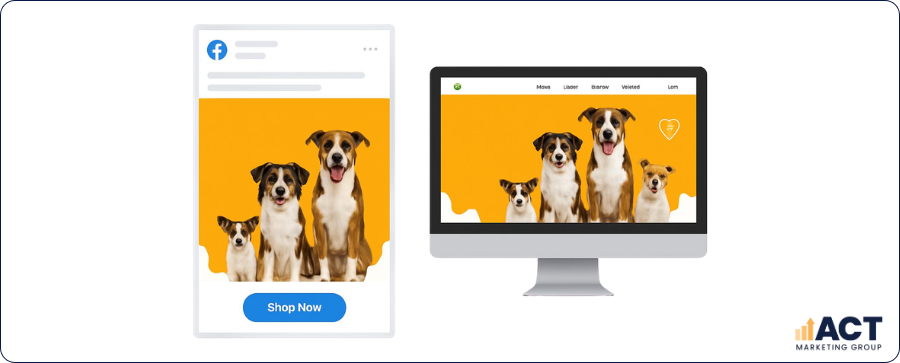
Get Better Vet Ad Creatives That Pet Owners Actually Click On
If you want marketing success from your ad spend, focus first on producing better ad creatives for one service line, then scale what works across ad formats. Build around clear hooks, high quality imagery, and a single call to action, then improve through A/B testing using real performance data.
ACT Marketing can help vet clinics create ads with a consistent brand voice, manage creative assets across marketing channels, and turn scattered advertising campaigns into a repeatable system for successful ad creatives. If you share your top three services and your main service area in the ACT, we can map a simple creative plan that fits your clinic, your brand identity, and your budget.
Frequently Asked Questions
Start with 3–5 ad creatives per priority service line, plus 2–3 for retargeting. This is enough variety to prevent fatigue while still being manageable for your team. Rotate monthly and keep winners as “always on” until results soften.
Video ads often win for capturing attention, especially on social media, but static images often win for clarity and quick scanning. Most clinics get better results by running both: video for reach and interest, static for retargeting and conversion. The best choice depends on the service line and the audience’s attention in that moment.
Dynamic ads can work well for retargeting when your messaging stays consistent, and the landing page matches the promise. Keep the options tight: a small set of headlines, one clear offer style, and high-quality visuals. If results are messy, reduce variations and test fewer combinations.
Use clear brand guidelines and a short “message bank” your team can reuse. Keep one standard structure (Hook → Proof → Next Step) and a small set of approved phrases for each service line. This improves brand recognition and makes it easier to scale marketing campaigns without losing your brand voice.