

Which B2B marketing metrics actually matter for growth is the question that separates busy dashboards from clear, confident decisions about revenue growth and business growth. When every report is full of numbers but light on insight, it becomes hard for sales and marketing teams to agree on what works, which marketing efforts to scale and how marketing spend truly supports your broader business objectives.
Why Many B2B Marketing Metrics Miss the Mark
B2B marketing reports often look busy but do not clearly link to total revenue or paying customers. Teams can get stuck reviewing impressions, clicks or followers while the sales team is still struggling to hit targets, manage lead quality and move opportunities through the sales cycle.
This gap usually appears when marketing KPIs are chosen without a clear line back to total revenue generated, customers acquired or marketing attributed revenue. When sales and marketing teams do not share a simple set of key metrics, it becomes difficult to make data driven decisions and to prove that marketing initiatives support real business objectives.
Get a Customized Marketing Strategy for Your Business
Schedule a free consultation to discuss how our digital marketing solutions can help you reach more customers.
Revenue Metrics That Actually Drive Growth
Before diving into leads and conversions, it helps to focus on the revenue metrics that show whether your B2B marketing is truly working. These numbers connect your marketing efforts directly to income, profit and cash flow.
Marketing Attributed Revenue and Total Revenue Generated
Marketing attributed revenue shows how much total revenue generated can be traced back to marketing campaigns, content marketing, SEO and digital marketing channels. It helps you understand what portion of your total revenue is being driven by marketing initiatives rather than solely by outbound sales or referrals.
By comparing marketing attributed revenue to overall total revenue and average revenue per customer, you can see how much your marketing team contributes to revenue growth. Over time, this makes it easier to decide where marketing dollars should go, and which marketing channels deserve more attention.
Monthly Recurring Revenue and Annual Recurring Revenue
For subscription or retainer-based businesses, monthly recurring revenue and annual recurring revenue are central revenue metrics. Monthly Recurring Revenue (MRR) shows average monthly revenue from ongoing contracts, while annual recurring revenue gives you a yearly view of these regular payments.
When you link MRR and annual recurring revenue to the leads generated and customers acquired through B2B marketing, you can see which campaigns and marketing channels bring in customers who support stronger cash flow and long-term business growth.
Lead Quality Qualification and Conversion
Lead metrics are where many B2B marketing teams spend time, but not all lead numbers are equally helpful. The focus should be on qualified leads that truly fit your target profile and are likely to become paying customers.
Marketing Qualified Leads and Sales Qualified Leads
Marketing Qualified Leads (MQLs) are leads that your marketing team has identified as more engaged or better fitting your target profile than general enquiries. Sales Qualified Leads (SQLs) are those that the sales team has accepted as worth pursuing based on agreed criteria.
To make these B2B marketing metrics useful:
Define together what a qualified lead looks like for your business.
Track the volume of MQLs and SQLs and how they trend over time.
Watch the rate at which marketing qualified leads become sales qualified leads.
When both teams trust these definitions, MQLs and SQLs become powerful key performance indicators rather than just vanity metrics.
Conversion Rate and Movement Through the Sales Funnel
Conversion rate is a key metric across your sales funnel. In B2B marketing, some of the most useful conversion rates include:
Leads generated to MQLs
MQLs to SQLs
SQLs to opportunities
Opportunities to paying customers
Strong conversion rates usually indicate good lead quality, a clear sales process and marketing content that answers the right questions. Poor conversion rates often signal problems with targeting, messaging or how leads are handed from marketing to the sales team.

Customer Acquisition Cost and Marketing Efficiency
Customer Acquisition Cost (CAC) and related cost metrics show whether your marketing investments are sustainable. These numbers help you see how much you spend to win new customers and whether that spend is justified by the revenue they bring in.
Customer Acquisition Cost and Total Marketing Spend
Customer acquisition cost is calculated by taking your total marketing spend plus relevant sales expenses or broader marketing and sales expenses over a period and dividing this by the number of new customers acquired in that same period. Many teams refer to this as customer acquisition cost CAC to keep it front of mind.
Tracking CAC alongside total marketing spend and total revenue gives you a clear view of cost efficiency. If CAC is rising while average revenue per customer stays flat, your marketing costs may be outgrowing the value of the customers you are winning.
Cost Efficiency by Marketing Channel
Cost efficiency improves when you understand how CAC behaves across different marketing channels. For example, Google Ads might have a higher CAC but could bring in larger, longer-term customers, while some social channels might look cheap but deliver low-quality leads.
By reviewing CAC, marketing costs and conversion rate for each channel, you can:
Shift marketing dollars towards channels that drive more qualified leads.
Reduce spend where the cost of customers acquired is too high.
Support more accurate forecasting around cash flow and marketing investments.
Customer Lifetime Value and Retention
Customer Lifetime Value (CLV) and retention metrics keep your marketing team focused on the long-term impact of their work, not just short-term wins. This is especially important in B2B marketing, where business relationships often last for many years.
Customer Lifetime Value and Customer Lifetime
Customer lifetime value estimates the total revenue or profit you earn from a single business customer over the full customer lifetime. Even a simple approach using average monthly revenue, average revenue per customer and expected duration of the relationship can offer useful insight.
When you compare customer lifetime value to customer acquisition cost, you see whether your marketing strategy is sustainable. Healthy marketing performance usually shows CLV significantly higher than CAC, meaning you earn back your marketing and sales and marketing expenses and still generate healthy profit.

Customer Retention Customer Loyalty and Existing Customers
Retention metrics focus on how well you keep and grow existing customers. Common measures include:
Renewal rates for contracts or subscriptions
Expansion revenue or upsells from existing customers
Customer satisfaction scores and net promoter score
Marketing efforts such as content marketing for customers, helpful email marketing and a structured customer feedback loop can improve customer satisfaction and customer loyalty. In turn, this supports longer customer lifetime, higher customer lifetime value and more stable monthly recurring revenue.
Website And Digital Marketing Metrics That Matter
Website and digital marketing metrics often create the first impression of marketing performance. The key is to look beyond surface numbers like hits or followers and focus on actions that move people closer to becoming paying customers.
Website Traffic and High Intent Actions
Website traffic is useful, but it is more important to know what potential customers do when they arrive. Some high-intent actions worth tracking include:
Contact form submissions from decision-makers
Demo or consultation requests
Downloads of high-value content linked to buying decisions
Using tools such as Google Analytics and your Customer Relationship Management (CRM) system together helps you link website traffic and on-site behaviour to leads generated, qualified leads and, eventually, customers acquired.
Digital Marketing Channels and Marketing Performance
Digital marketing includes channels like SEO, Google Ads, social media and email marketing. For each channel, look at:
Leads generated and lead quality
MQLs and SQLs created
Opportunities and total revenue generated
Channel-level CAC and overall cost efficiency
This joined-up view lets your marketing team see how different marketing channels contribute to marketing success and where to focus future marketing campaigns.

Sales and Marketing Alignment Metrics
Sales and marketing teams work best when they share a simple set of numbers that describe how prospects move from potential customers to paying customers. These alignment metrics keep everyone focused on the same goals.
Sales Cycle Length and Sales Process Health
Sales cycle length measures how long it takes for a lead or opportunity to move from first contact to closed deal. Shorter sales cycle length typically points to clear messaging, good qualification and a smooth sales process supported by helpful marketing content.
If sales cycle length increases, it might mean prospects are not getting the right information, or the sales funnel has friction. Marketing can assist by creating content that answers common questions earlier, improving landing pages and refining nurture emails.
Sales Funnel Metrics and Key Performance Indicators
To understand the health of your sales funnel, track key performance indicators at each stage:
Number of leads generated by marketing campaigns
Volume of marketing qualified leads and sales qualified leads
Number of opportunities created and progressed
Deals won, total revenue and total revenue generated from those deals
These marketing KPIs give a shared view of pipeline quality, making it easier to adjust both marketing strategy and the sales process where needed.
Have Questions?
We're Here to Help!
Measuring Marketing Effectiveness and Making Data Driven Decisions
Once your metrics are in place, the focus shifts to using them well. Marketing effectiveness is about linking activity back to outcomes and making clear, data informed choices.
Return On Marketing Investments and Revenue Metrics
Return on marketing investments compares the revenue linked to marketing efforts with total marketing spend. By pairing this with revenue metrics like marketing attributed revenue and average revenue per customer, you can judge whether your marketing initiatives are bringing in enough revenue to justify their cost.
Looking at these numbers over time and across campaigns means you can:
Scale marketing efforts that clearly drive revenue growth.
Refine or retire campaigns that underperform.
Ensure that marketing investments align with long-term business objectives.
Using Marketing Data and Customer Feedback
Quantitative marketing data is only part of the story. Qualitative input from a customer feedback loop, customer satisfaction scores and net promoter score can reveal why certain campaigns perform better than others.
Combining data from customer relationship management tools, analytics platforms and direct customer feedback helps you improve customer satisfaction and refine your go to market strategy. This leads to stronger marketing effectiveness and more resilient customer relationships.
Building A Focused B2B Marketing Scorecard
A lean scorecard makes it easier to keep everyone aligned. The goal is not to track every possible metric, but to choose a small set that shows whether your B2B marketing is truly helping to drive revenue growth.
A practical B2B marketing scorecard might include:
Revenue metrics: marketing attributed revenue, total revenue, average revenue per customer, monthly recurring revenue
Lead and funnel metrics: leads generated, MQLs, SQLs, conversion rates at each stage of the sales funnel
Cost and efficiency metrics: customer acquisition cost, total marketing spend, cost per opportunity, sales and marketing expenses
Retention and satisfaction: customer lifetime value, customer retention rates, customer satisfaction and net promoter score
Regularly reviewing this scorecard with both sales and marketing teams encourages joint ownership of marketing success and supports consistent, data driven decisions.
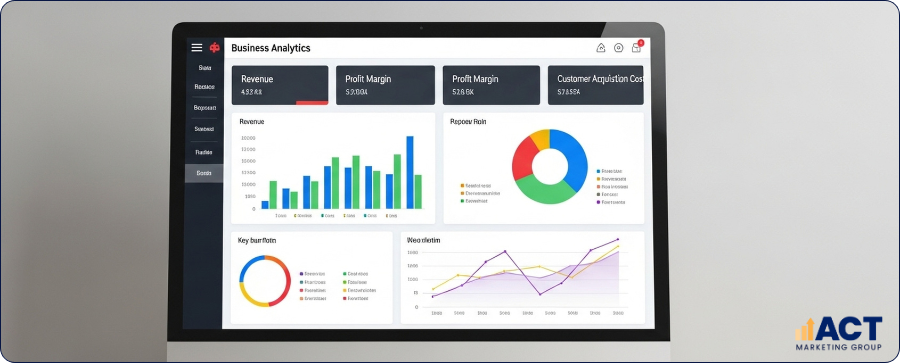
Ready To Focus on the B2B Marketing Metrics That Matter
Which B2B marketing metrics actually matter for growth will vary slightly between industries, but the core idea is the same: focus on the numbers that link your marketing efforts to qualified leads, customers acquired, customer lifetime value and total revenue. When these key metrics guide your decisions, every marketing dollar works harder and every campaign has a clearer purpose.
If your current reports feel cluttered and disconnected from real outcomes, we can help you build a clear, practical metric framework that aligns with your business objectives and supports long-term revenue growth. We work with Australian business-to-business organisations to connect SEO, digital marketing and broader marketing strategy to the key performance indicators that truly matter, so your marketing team and sales team can pull in the same direction.
Talk To ACT Marketing About Your B2B Marketing Metrics
ACT Marketing helps Australian B2B businesses design scorecards, dashboards and marketing strategies that link marketing metrics to real revenue growth, stronger customer relationships and sustainable business growth. If you are ready to simplify your metrics, improve cost efficiency and get more value from your marketing investments, ACT Marketing provides tailored support to align your marketing and sales teams, refine your go to market strategy and drive clear, measurable results.