

Choosing the right marketing metrics for your business goals is one of the biggest challenges for Australian business owners trying to make sense of their data and marketing investments. When you track everything, reports become noisy, but when you track very little, it becomes hard to see whether your marketing is actually supporting growth and cash flow.
Why Choosing the Right Metrics Matters
Many businesses in Australia invest in marketing without a clear view of which metrics truly matter, which can lead to worse decision outcomes and wasted spend. It is easy to get distracted by numbers that look impressive but do not answer questions about performance, customer experience, or long-term outcome.
When you select the right metric for each goal, you move from guessing to a simple behavioral framework that supports better decisions. You can see how your marketing mix decisions affect awareness, leads, sales, and customer loyalty, and you gain confidence that your efforts are aligned with your business objectives.
Get a Customized Marketing Strategy for Your Business
Schedule a free consultation to discuss how our digital marketing solutions can help you reach more customers.
The Risk of Vanity Metrics
Vanity metrics are figures that grow quickly but say very little about effectiveness or growth. Common examples include social media followers, raw website visits, and email list size with no view of engagement or sales.
These numbers can hide deeper challenges, such as low customer satisfaction or poor campaign effectiveness. Instead, focus on individual metrics that link clearly to outcomes like leads, revenue, and repeat business so your company can measure what truly matters.
Why Context and Alignment Matter
Metrics only become meaningful when placed in the right context and aligned with your goals. A high click-through rate may look positive, but if the traffic does not match your target audience or does not convert, it offers limited value.
By looking at your metrics as part of a broader framework, you can determine how each data point fits into your overall strategy. This comprehensive view helps you identify opportunities and challenges across digital channels, from search and social media to email and your website.

How To Choose Metrics That Align with Your Goals
To choose the right marketing metrics for your business goals, start with what you want to achieve, then select metrics that clearly reflect those aims. This keeps your focus on insight and improvement rather than tracking for the sake of tracking.
Step 1: Define Clear, Measurable Goals
Begin by setting a small number of specific goals for your business, such as increasing qualified leads, lifting online sales, or improving customer retention. Think about both financial metrics, like revenue and cash flow, and brand goals, like awareness and trust with your target audience.
Once your goals are clear, ask which metrics would show that you are moving in the right direction. These become your key metrics and keep your analysis grounded in your real business needs.
Step 2: Balance Leading and Lagging Metrics
A helpful way to structure your metrics is to separate them into leading and lagging indicators. Leading indicators are early signs of performance, such as website engagement or enquiry volume, while lagging indicators show final results like sales, profit, or long-term customer value.
Balancing both types of metrics gives you enough notice to adjust campaigns while still keeping an eye on final outcomes. This balance improves metric effectiveness and supports long-term growth.
Step 3: Map Metrics To Your Funnel
Most marketing can be viewed through a simple funnel framework: awareness, consideration, conversion, and retention. Assign a small set of metrics to each stage so you can see where customers drop off.
For example, awareness might be measured by impressions and brand search volume, consideration by time on site and content engagement, conversion by cost per lead and sales conversion rate, and retention by customer satisfaction scores and repeat purchase rates. This structure provides a clear, next generation view of how your marketing supports the full customer journey.

Core Metrics That Support Australian Businesses
While each business is different, there are common metrics that help most Australian companies understand performance, research market trends, and refine strategies. The key is to keep your list focused and relevant.
Website and SEO Metrics
Your website often acts as the main hub for your marketing and product launch activity, so website metrics are essential. Organic traffic, top landing pages, and search queries reveal how well you reach your audience through SEO and other digital channels.
Alongside traffic, track conversion rate on key pages, enquiry form completion, and calls from your site. These metrics answer questions about how effectively your site turns visitors into leads and provide insight into where you might improve content, layout, or calls to action.
Paid Advertising and Digital Campaign Metrics
If you use paid ads on search, social media, or other platforms, focus on metrics that connect spend to outcome. Cost per click, cost per lead, and cost per acquisition show how efficiently your campaigns attract customers.
Combine these with return on ad spend and basic financial metrics like revenue per campaign to see which channels offer the strongest performance. This lets you allocate budget with confidence and avoid overspending on campaigns that do not deliver.
Sales, Financial, and Customer Metrics
To understand the broader impact of your marketing, track financial metrics and customer-focused data together. Average order value, customer lifetime value, and lead-to-sale conversion rates connect marketing activity to cash flow and profitability.
Customer satisfaction and feedback give insight into customer experience and highlight areas for improvement across your process. Over time, this mix of metrics helps your business build stronger customer loyalty and a more stable base for growth.
Matching Metrics to Your Stage of Growth
The right marketing metrics for your business goals will change as your company grows. A simple set of metrics might be enough early on, while more advanced analysis may be useful later.
Early-Stage or New Campaigns
In the early stage, focus on metrics that show whether your marketing is gaining traction. Awareness, website visits from your target audience, and early enquiries are good starting points.
At this stage, you do not need a complex statistical model or advanced analytics. Instead, look for clear signs that your message, offer, and channels are starting to work, and use surveys or direct feedback to refine your approach.
Growing and Optimising Your Marketing
Once you see steady traffic and leads, you can shift to improving effectiveness and efficiency. Here, conversion rates, cost per lead, and revenue per channel become more important.
By comparing performance across campaigns, you can identify opportunities to adjust creative, offers, or landing pages. This ongoing improvement process helps your marketing deliver more growth without a matching rise in costs.
Established Businesses and Deeper Analysis
For more established businesses, a broader set of metrics and tools can support strategic decisions. You might look at detailed customer segments, channel-specific lifetime value, or how different parts of your marketing automation platform support the overall customer journey.
You can also use structured business research, such as customer surveys and market trends analysis, to refine your strategies. While you may work with more data, the principle stays the same: focus on metrics that provide insight and support clear decisions.
Have Questions?
We're Here to Help!
Building A Practical Reporting and Analytics Rhythm
Choosing metrics is only useful if you have a simple way to monitor them. A regular reporting rhythm helps you stay close to performance without becoming overwhelmed.
Decide What To Track and When
Set up a simple plan for monitoring. You might check key health metrics weekly, review full funnel metrics monthly, and step back for a deeper strategic review every quarter.
This rhythm gives you time to see trends, understand challenges, and adjust strategies before issues grow. It also keeps your focus on steady improvement rather than reacting to every daily change.
Keep Dashboards and Tools Simple
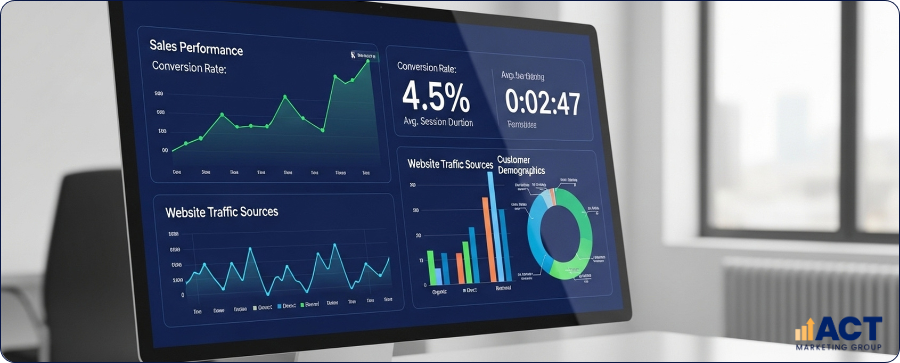
Whether you use basic spreadsheets or a marketing automation platform, keep your dashboards clear and easy to read. Limit them to your most important metrics, use plain labels, and avoid unnecessary complexity.
The aim is to provide a quick, honest snapshot of how your marketing is tracking. Anyone in the business should be able to glance at the dashboard and understand performance without needing a technical background.
Involve Your Team and Partners
Metrics are most helpful when everyone involved in your marketing understands them. Share key results with your team and any external partners so you can work from the same information.
Use the numbers as a starting point for conversation about strategies, campaigns, and customer experience. This shared understanding helps your business align efforts across channels and move together towards shared goals.

Conclusion: Turn Metrics into a Practical Decision Tool
Choosing the right marketing metrics for your business goals allows you to move from guesswork to informed decisions. By aligning metrics with your objectives, understanding your audience, and keeping your tracking framework simple, you gain a clearer view of performance and growth.
Over time, consistent monitoring and thoughtful analysis help you identify what works, refine what does not, and direct your marketing investments with confidence. You do not need complex models to benefit from metrics, just the right focus and a steady process.
Get Support Choosing the Right Metrics
If you feel overwhelmed by data and unsure which metrics to trust, you are not alone. We work with Australian businesses every day to simplify tracking, clarify objectives, and build practical reporting that supports real decisions.
ACT Marketing can help you choose the right metrics, set up straightforward analytics, and align your SEO, digital channels, and content so they support your business goals. If you are ready to make your metrics work harder for your business, reach out to our team and we will guide you through the next steps in clear, friendly language.