

How Australian vet clinics can use Google Maps photos and posts to stand out in “vet near me” results starts with making the clinic easy to recognise, understand and contact. A well-maintained Google Business Profile can help local customers see where the clinic is, when it is open, what services it offers and what they can expect before they make an enquiry. For a veterinary clinic, appearing in local search results is only part of the task. Your business listing also needs to show that you are a real business with accurate details, current photos and useful information that matches the needs behind relevant searches.
Strong Google Maps Visibility Starts With Accurate Information
Before adding new photos or Google posts, check that the main details on your Google Business Profile are correct. Your business name, business category, business location, telephone number, website, service area and business hours should match the information shown on your website and other local directories. These details help search engines understand what the clinic does and where it operates. They also help potential customers decide whether the practice is the best match for their needs, particularly when they are comparing several clinics on mobile devices.
The business name should reflect the real clinic name shown on signs and official documents. Adding extra local keywords or service terms to the name may create an inconsistent listing and is not a reliable way to improve Google Maps ranking. Read our guide, Google Business Profile for Vets: The Highest-ROI Local SEO Strategy for Aussie Clinics, for a practical framework covering profile setup, local search visibility, reviews, content updates and performance measurement.
Your business description should explain the clinic’s services. It may mention general consultations, preventive care, surgery, dentistry, diagnostics, emergency arrangements or other services that are genuinely available, but it should not be filled with repeated search phrases. Accurate business hours are especially important for veterinary clinics. If your opening times change on weekends, public holidays or during staff training, update the listing so local customers are not relying on outdated information.
Get a Customized Marketing Strategy for Your Business
Schedule a free consultation to discuss how our digital marketing solutions can help you reach more customers.
Photos Help People Understand the Clinic Before They Visit
Once the business profile is complete, photos can reduce uncertainty for people who find the clinic through Google Maps or Google Search. Good images show that the listing represents an established business and help owners understand how to find the clinic, where to park and what the environment looks like. The strongest photos are usually practical rather than promotional. They should show the actual business location, the team and the parts of the clinic that clients are likely to see.
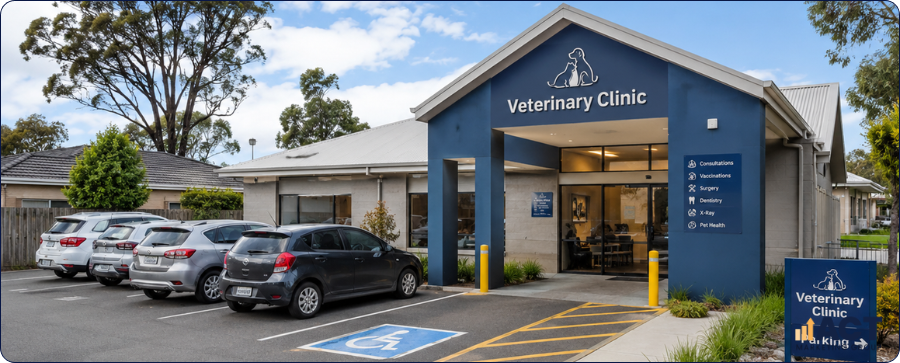
Start with clear exterior images showing the building, signage, driveway, car park and main entrance. These photos are particularly useful when the clinic is located in a shopping area, medical centre, shared building or less visible street position. Interior photos can show the reception area, waiting room and consultation spaces. Where the clinic has separate dog and cat waiting areas, accessible entrances or quieter spaces, a clear image may help clients plan their visit.
Team photos can also make the profile more useful. Current images of vets, nurses and reception staff provide a realistic introduction to the practice, particularly when they are taken in the clinic rather than against an unrelated background.

A Photo Plan Should Follow the Client Journey
A useful Google Maps listing should show the clinic in the same order that a client may experience it. This creates a clearer picture than uploading a large number of unrelated animal photos. Begin with the street approach and entrance, then show the reception area, waiting room, consultation rooms and appropriate service spaces. The aim is to help clients understand the clinic without exposing private information or showing images that may be confronting.
For example, a general veterinary practice may upload photos of its reception desk, consulting rooms, dental equipment and diagnostic areas. A clinic treating multiple species may also show the facilities relevant to those animals, provided the images accurately reflect the services offered. Clinics with multiple locations should create a separate and accurate business profile for each location where appropriate. Each listing should have its own address, hours, contact details and location-specific photos rather than using the same set of images across every clinic.
This distinction matters because local search is influenced by the searcher’s location. A person looking for a vet near one suburb should be able to see the correct clinic entrance, team and service information for that business location.
Image Quality Matters More Than Quantity
Uploading more photos does not automatically improve local rankings. A smaller collection of clear, current and relevant images is usually more useful than a large gallery containing duplicates, old signage or poorly lit rooms. Photos should be in focus, naturally lit and easy to understand on mobile devices. Heavy filters, excessive editing and stock images can make it harder for a person to judge what the clinic is actually like.
Before publishing an image, check the full background. Computer screens, client records, medication labels, whiteboards and appointment lists may contain information that should not appear online. The clinic should also have a simple internal process for approving photos. A staff member can confirm that the image reflects the real business, does not reveal private information and does not create an inaccurate impression of a service or treatment.
A practical Google Maps SEO checklist for clinic photos can be kept brief:
Show the real clinic and current team.
Include the exterior, entrance and reception area.
Remove confidential or outdated information.
Use clear images that display well on phones.
Replace photos when the clinic layout or signage changes.
Google Posts Keep the Business Profile Current
After the core photos are in place, Google posts can help the clinic share timely information. Posts appear on the business profile and can direct people to a relevant page, announcement or appointment option. Useful topics include public holiday hours, seasonal pet health reminders, changes to parking, new team members, new services and updates to weekend availability. Each post should address a genuine client need rather than being published only to make the profile look active.
A post about summer heat, for example, could explain signs that may require veterinary attention and include a direct link to a detailed clinic article. A holiday post could confirm opening hours and explain how urgent cases are handled outside normal times. Google posts should be short enough to read quickly on mobile devices. The first sentence should make the main point clear, while the rest of the post can explain the next step. The wording should remain factual and measured. Avoid claims that suggest a guaranteed outcome, that the clinic is the best in the area or that a particular treatment is suitable for every animal.
Local Keywords Need to Be Used with Restraint
Local keywords can help explain where the clinic operates and which services it provides, but they should be used naturally. A clinic may refer to its suburb, nearby areas and key veterinary services where those details are relevant to the page or post. Repeating phrases such as “vet near me” or “best vet in Canberra” throughout the business description does not make the profile more useful. The wording should focus on clear service information rather than trying to force Google Maps SEO terms into every sentence.
The clinic website should also support the listing. Service pages, location details and contact information should match the business profile, helping search engines connect the website with the correct local business. Structured data may also support this connection by presenting business details in a consistent format on the website. This is normally handled by the website developer or local SEO agency rather than clinic staff.
For a service area business or a clinic serving several surrounding suburbs, the website can explain the geographic area covered without creating thin pages for every nearby location. Each location page should provide useful, specific information rather than simply changing the suburb name.

Reviews Influence Trust but Need Careful Management
Google reviews are another part of how people assess a veterinary clinic in local results. Positive reviews may help potential customers understand common themes in the client experience, while negative reviews may highlight concerns that require a measured response. Clinics can ask clients for honest feedback without requesting only positive reviews. A direct link or QR code may make the process easier, provided the request is neutral and does not pressure the client.
The aim should not be to collect more reviews at any cost. A steady flow of genuine new reviews from real clients is more useful than sudden review activity that appears unusual or does not reflect normal appointment numbers. Review velocity is sometimes used to describe the rate at which reviews are received, but clinics do not need to treat it as a separate campaign target. The practical goal is to maintain a consistent process for asking for feedback after suitable interactions.
Responses should remain professional, especially when addressing negative reviews. The clinic should avoid confirming that a reviewer is a client or discussing an animal’s treatment in public. Review signals may contribute to how an established business is understood, but they are only one part of local search rankings. Accurate information, relevant services, location, website quality and the searcher’s distance from the clinic also matter.
Duplicate Listings Can Weaken a Clinic’s Local Presence
Duplicate listings can confuse both local customers and search engines. They may appear after a clinic moves, changes its business name, acquires another practice or creates a second profile by mistake. Each clinic should periodically search its name, old address and telephone number to identify duplicate or outdated entries. Incorrect profiles should be corrected, merged or removed through the appropriate process rather than left to compete with the main Google Maps listing.
This is particularly important for clinics with multiple locations. Every real business location should have accurate, separate information, but there should not be several profiles for the same clinic at the same address. Local directories should also be reviewed for outdated names, addresses or phone numbers. Consistent information across the business profile, website and major directories makes it easier for local customers to identify the correct clinic.
Have Questions?
We're Here to Help!
Performance Reporting Should Focus on Useful Actions
A clinic should measure whether its local SEO work is producing relevant enquiries, not just whether more people are seeing the listing. Views can be useful, but actions such as calls, website visits, direction requests and appointment form completions provide stronger context. Google Business Profile data can show how people interact with the listing. Google Search Console can provide information about searches that lead people to the clinic website, while website analytics can show what they do after arriving.
A rank tracker or geographic grid may be used to monitor local rankings across different parts of the service area. These tools can help show that a business ranks differently depending on the searcher’s location, although ranking data should not be treated as a complete measure of success. Google Maps ranking can change due to distance, competition, business relevance and changes in the local results. A clinic may rank on Google Maps in one suburb but appear lower a few kilometres away.
Performance reporting should therefore connect visibility with practical results. Track whether relevant searches lead to suitable calls, bookings and direction requests rather than focusing only on a single local pack position.
Build Google Maps Activity Into the Clinic Routine
Most businesses improve their profiles in short bursts and then leave them unchanged. Veterinary clinics are more likely to maintain local visibility when profile updates become part of a simple monthly routine. The practice manager or nominated staff member can review business hours, upload photos, schedule useful posts and check for duplicate listings. A local SEO agency may support the technical and reporting work, but the clinic still needs to provide accurate operational information and current images.
A manageable routine could include a monthly profile check, one or two useful posts and several new photos when there is something relevant to show. There is no need to publish daily or create content that adds little value. Over time, this approach helps the business profile remain accurate and useful. It also gives local customers clearer information when they are deciding which clinic to contact.

Strengthen Your Vet Clinic’s Google Maps Presence
Google Maps photos and posts can help an Australian veterinary clinic stand out by reducing uncertainty at the point of local search. Accurate business information, recognisable images, timely updates and clear website links make it easier for potential customers to understand the clinic and take an appropriate next step. Begin by reviewing the current listing as a client would. Check whether the entrance is easy to recognise, the business hours are correct, the service information is clear, and the latest photos still reflect the clinic.
From there, create a practical schedule for new images, useful Google posts and regular performance reporting. Consistent, accurate updates are more likely to support sustainable local search visibility than excessive keywords, generic posts or irregular promotional activity.