

Technical SEO Fixes for Australian Vet Websites: Page Speed, Core Web Vitals, and Crawlability Made Simple starts with making important clinic pages fast, accessible and easy for search engines to understand. For veterinary practices, problems such as oversized images, unnecessary scripts, broken links or blocked pages can interfere with both the client experience and website ranking in organic search results. As a clinic owner or practice manager, you do not need to treat technical SEO as a long list of developer tasks. A more useful SEO strategy is to prioritise the pages connected to services, bookings and local visibility, fix the issues affecting those pages, and then monitor whether the website's performance and search visibility improve.
Start With the Pages That Matter to Your Veterinary Clinic
Before changing plugins, hosting or website templates, identify the website pages with the greatest operational and search value. These will usually include your homepage, contact and booking pages, location information and major veterinary service pages. Google Search Console can help you determine which pages Google has discovered and indexed, identify search queries connected to those pages and flag indexing problems that deserve further investigation. Google Analytics can provide additional context about website traffic and how users navigate through important parts of the site.
Get a Customized Marketing Strategy for Your Business
Schedule a free consultation to discuss how our digital marketing solutions can help you reach more customers.
Starting with these pages prevents your team from spending time fixing minor technical issues while important service or conversion pages remain difficult to use.
Improve Page Speed Where Clients Are Most Likely to Notice It
Once priority pages are clear, review how quickly each web page becomes useful on mobile devices. A prospective client looking for opening hours, emergency information or a booking form should not have to wait for large photographs, animations or third-party tools to finish loading first. Veterinary websites are often image-heavy and may also use embedded maps, booking systems, chat tools and analytics scripts. Practical improvements can include resizing and compressing images, removing scripts or plugins that are no longer required, using efficient image formats where appropriate, reviewing caching and testing booking or contact pages separately.
Image alt text should also describe the image accurately and provide useful context for screen readers. Alt tags should not be filled with target keywords purely in an attempt to improve website ranking, because accessibility and relevance should remain the priority. The objective is not simply to achieve a perfect score from free online tools or SEO tools. Performance work should remain connected to the usefulness of the page and the experience of website visitors.
Use Core Web Vitals to Identify Real Performance Problems
After obvious speed issues are addressed, Core Web Vitals provide a more structured way to assess real user experience. The measures focus on loading performance, responsiveness and visual stability, helping identify pages where important content loads slowly, interactions lag or elements unexpectedly move. For a veterinary website, the practical value is identifying problems that affect people trying to reach relevant information or complete an action. An oversized homepage image may delay the main content, heavy scripts may slow a booking form, and banners or images without reserved space can cause page content to move while loading.
Search Console can help identify Core Web Vitals issues where sufficient usage data is available, while PageSpeed Insights and other free tools can support individual web page reviews. These tools are most useful when they guide practical improvements rather than becoming the sole measure of SEO success. For a broader view of changing search behaviour, read our guide to 2026 SEO Trends Australian Vet Clinics Must Know to Stay Visible in Local Search.
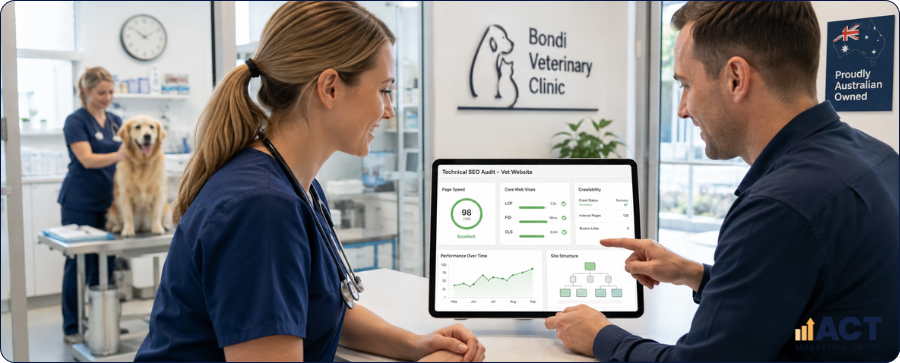
Remove Technical Weight Without Removing Useful Website Features
Speed optimisation should not mean stripping useful functionality from your veterinary website. Booking platforms, maps, analytics and enquiry forms may be important to clinic operations even when they add additional code. Instead, review what is loading on each page and whether it needs to load immediately. A third-party widget displayed across the whole website, for example, may not need to appear before the main booking or contact action on a high-priority service page.
Review Plugins and Third-Party Tools
For WordPress and similar platforms, remove plugins that duplicate existing functionality or are no longer in use. Updates should also be managed carefully so that a performance improvement does not create compatibility, security or usability problems elsewhere on the website.
Test Changes on Important Pages
Check booking, contact and service pages after significant technical changes. A slightly faster business website is not an improvement if a form, navigation menu or booking function stops working correctly.
Make Important Veterinary Pages Easy for Google to Crawl
Once performance is under control, check whether Google and other search engines can actually reach the pages you want appearing in search results. Search engines discover pages through links and other mechanisms, while XML sitemaps can provide another route for finding important website content. Crawlability problems can appear after redesigns, migrations or changes to website settings. A technical review should confirm that important pages are not unintentionally blocked, pages intended for search can be indexed, internal links reach working URLs, redirects point to relevant replacements and the XML sitemap reflects current website content.
Search Console is useful when investigating why a page is missing from Google search results. Robots.txt rules may also need checking during a crawlability review, although blocking a page from crawling should not be treated as the standard method for removing it from search engine results.
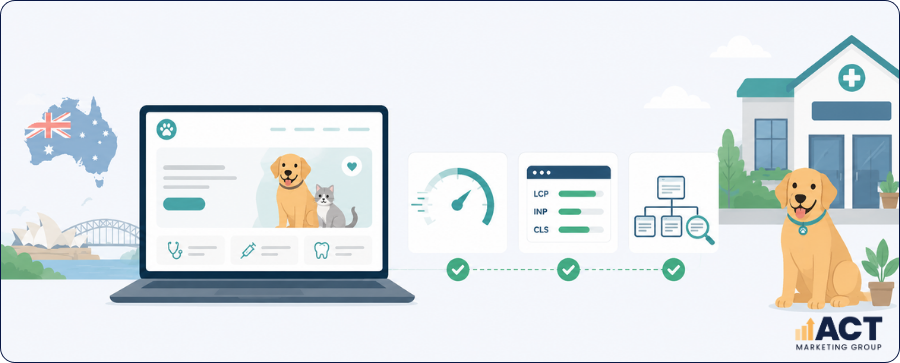
Build A Site Structure That Reflects Your Veterinary Services
After search engines can reach your pages, review whether the site structure makes relationships between services and resources clear. Major veterinary services should be easy to reach from navigation, service hubs or relevant pillar pages rather than sitting several clicks deep with few internal links. For example, a veterinary dentistry page may connect naturally with anaesthesia information or dental-care resources, while a surgery page may link to diagnostics and pre-operative guidance. Descriptive internal links can help users navigate the website while giving search engines clearer context about related website pages. A simple structure might look like:
Homepage → Veterinary Services → Dentistry → Dental Procedure Information
rather than:
Homepage → Resources → More Information → Other Services → Dentistry
The first structure makes the hierarchy easier to interpret and keeps relevant content grouped around the same subject.
Fix Broken Links, Redirects and Sitemaps as Part of the Same Review
Broken links often accumulate when clinics rename services, rebuild their website or remove older resources. Where a useful page has moved, its previous URL should generally redirect to the most relevant replacement rather than sending unrelated URLs to the homepage. Your XML sitemap should also remain aligned with the current website. It should focus on website pages you want search engines to discover rather than obsolete URLs, duplicate content or system-generated pages with little value for the target audience.
Checking these areas together is particularly important when an existing website is redesigned or restructured.
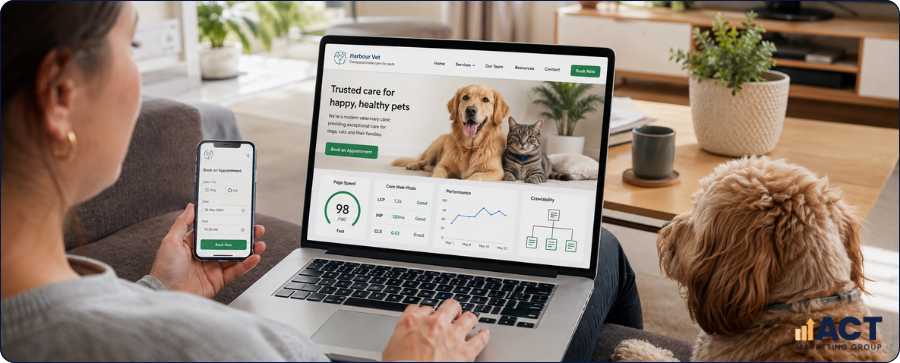
Keep Technical SEO Connected to Useful Veterinary Content
Technical improvements create a stronger foundation, but they do not replace quality content. A fast dentistry page with little useful information may still struggle to serve prospective clients if the page's content does not clearly explain the service, clinic process, physical location and appropriate next steps. Keyword research can help identify relevant keywords, search terms and questions connected to veterinary services. Keyword research tools, Search Console data and competitor analysis can provide useful direction, but creating content should still focus on providing valuable content for the clinic's actual target audience rather than forcing keywords related to a service into every paragraph.
Page titles and the meta title should clearly reflect the subject of each page. A good meta description can also help explain what the page offers when it appears in search engine results, although these elements should describe the page accurately rather than repeat target keywords unnecessarily. Internal linking can then connect educational content with relevant clinical services. An article about dental disease, for example, can guide readers towards the veterinary dentistry page where that relationship is genuinely useful. For practical ways to strengthen local visibility, read SEO for Vets: How to Optimise Your Google Business Profile.
Support Search Visibility Beyond Your Own Website
Once technical SEO and website content are in reasonable shape, off page SEO can support a broader online presence. This may include keeping an up-to-date Google Business Profile and earning relevant links from reputable websites where there is a legitimate reason for another organisation to reference the clinic or its resources. Quality backlinks generally have more practical value when they come from relevant local, professional or industry sources rather than unrelated websites. Guest blogging, social media channels and participation in appropriate online communities can support content marketing, but these activities should provide genuine information rather than exist solely to obtain links.
The clinic's Google Business Profile should also contain accurate contact details, opening hours and physical location information. Keeping this information consistent with the business website can make it easier for potential clients to confirm they have found the correct practice.
Have Questions?
We're Here to Help!
Measure Improvements Instead Of Assuming The Fix Worked
Technical SEO changes should have a clear reason and a practical way to assess the result. Search Console can show whether Google has discovered and indexed important pages, while its performance reporting can provide information about search queries, clicks, impressions and changes in search rankings. Google Analytics can provide another view of organic website traffic and how visitors interact with important pages. Instead of judging the work by one search results page or one keyword ranking, review trends across relevant keywords, priority service pages and booking or contact actions.
A practical measurement set may include indexed priority pages, organic impressions and clicks, Core Web Vitals status, organic traffic to major services, booking or contact actions and technical errors affecting important URLs. Comparing these measures before and after meaningful changes provides more context than focusing on individual keyword rankings.
Avoid Technical Fixes That Create Bigger Website Problems
The final stage is quality control. Changing URLs without redirects, deleting useful content, removing necessary booking functionality or adding more plugins to solve minor issues can leave the website in a worse position than before. Technical work should therefore be prioritised according to impact and tested after implementation. For most clinics, a smaller number of targeted fixes on important pages is more useful than making widespread changes simply because an SEO tool generated a long list of warnings.
Fresh content can be useful when it adds relevant information, but publishing regularly should not become an objective by itself. Updating existing website pages, removing outdated information and improving content where genuine gaps exist may provide a better use of resources.
Strengthen The Technical SEO Foundation of Your Veterinary Website
Technical SEO for a veterinary clinic is easier to manage when the work follows a clear order: prioritise important pages, improve performance, check crawlability, strengthen site structure, fix broken pathways and then measure the result. This keeps search engine optimisation connected to the pages displayed in search results that support veterinary services, local visibility and client enquiries.
If your clinic website has accumulated issues through redesigns, plugin changes, new service pages or years of updates, ACT Marketing can review where technical SEO problems are affecting the site and prioritise practical improvements. The focus is a website that remains accessible, useful and manageable while supporting a stronger foundation for search engine rankings and organic search visibility.
Frequently Asked Questions
Core Web Vitals contribute to the broader assessment of page experience, but strong scores alone do not guarantee a higher site ranking. Website owners should balance technical performance with on page SEO, accessibility, high-quality content and the overall experience of visitors using the site.
There is no single schedule suitable for every clinic. Reviews are particularly useful after a redesign, migration, major plugin change or addition of new pages, while free resources such as Search Console can help website owners monitor indexing, broken links and how important pages are displayed in search.
No. A sitemap can help search engines discover URLs across the world wide web, but it does not guarantee that every page will appear in search results. If an important page is missing, review its indexing status, internal links and content rather than relying on the sitemap or comparing visibility with other websites alone. A well-maintained sitemap is one part of building a strong online presence, but it works best alongside clear site structure, useful internal links and relevant page content.