

Local SEO trends for multi-location veterinary groups in Australia reflect changing search behaviour, the growing influence of AI search, and the need for consistent visibility across individual clinics. As search engines provide more direct answers and location-based recommendations, veterinary groups need an SEO strategy that helps pet owners find accurate information about nearby clinics, available services, and appointment options.
Local SEO Is Moving Beyond Traditional Search Rankings
Local SEO remains important for veterinary groups because pet owners frequently search for clinics based on location, service availability, and convenience. However, current SEO trends show that search visibility now involves more than appearing in traditional organic search results, with Google Maps, AI Overviews, and other search features influencing how people discover veterinary services.
For groups operating across several Australian cities or suburbs, this creates a need to balance centralised brand authority with individual clinic relevance. A strong national website may support overall recognition, but each clinic must still provide useful information that matches local search intent.
Get a Customized Marketing Strategy for Your Business
Schedule a free consultation to discuss how our digital marketing solutions can help you reach more customers.
Search Behaviour Is Becoming More Specific
Pet owners may search for "vet near me", "emergency vet Canberra", or "cat desexing Melbourne" depending on their immediate needs. These searches reflect different stages of the customer journey, from researching treatment options to contacting a clinic. Understanding these differences helps veterinary groups develop pages that address the needs of their target audience.
AI Search Is Influencing Veterinary Service Discovery
As local SEO evolves, AI search is becoming another consideration for veterinary groups. Google's AI Overviews, Google AI Mode, and other AI search engines can present information from multiple web pages, helping users explore questions without necessarily following the same sequence of website visits. This development does not make traditional SEO irrelevant, but it increases the importance of content quality, accuracy, and clear explanations. Veterinary groups should focus on information that is useful to pet owners and understandable to both search engines and AI systems.
AI-Generated Answers Depend on Accessible Information
AI-generated answers may summarise veterinary information, explain services, or help users compare options. A clinic website that clearly describes its opening hours, services, veterinary team, and contact details provides more useful information than one relying on broad promotional statements. These details may also help AI systems interpret the clinic's relevance to specific searches, although inclusion in AI answers is not guaranteed.
AI search is also changing how pet owners discover veterinary clinics online. Explore our guide to AI Ranking for Australian Veterinary Clinics for practical insights into improving content relevance, website structure, and visibility across traditional and AI-powered search platforms.

Human Expertise Remains Essential
AI tools can support keyword research, content planning, and routine editing, but veterinary content still requires human expertise. Information about medical procedures, symptoms, preventive care, or treatment options should be reviewed by appropriately qualified veterinary professionals. AI-generated content should not replace clinical judgement, particularly where inaccurate information could affect an animal's care.
Google Business Profiles Remain Central to Multi-Location SEO
Alongside AI search developments, Google Business Profile optimisation remains a practical priority for veterinary groups. These profiles help individual clinics appear in Google Maps and local search results, giving pet owners access to addresses, contact information, operating hours, and directions.
For organisations managing multiple clinics, consistency becomes more difficult when services, staffing arrangements, and operating hours change. Establishing a central review process can help maintain accurate information while allowing practice managers to update location-specific details.
An optimised Google Business Profile can help individual veterinary clinics improve their visibility in local search results. Read our guide to Google Business Profile SEO for Veterinary Clinics for practical insights into maintaining accurate business information, managing reviews, and strengthening your clinic's local search presence.
Review Management Requires a Consistent Approach
Online reviews may influence how prospective clients evaluate veterinary clinics, while review activity and business prominence can contribute to local search performance. A central review management policy should explain how staff request feedback, respond professionally, and escalate complaints. Responses must respect client confidentiality and avoid disclosing private information about animals, owners, or consultations.
Location-Specific Website Pages Are Becoming More Important
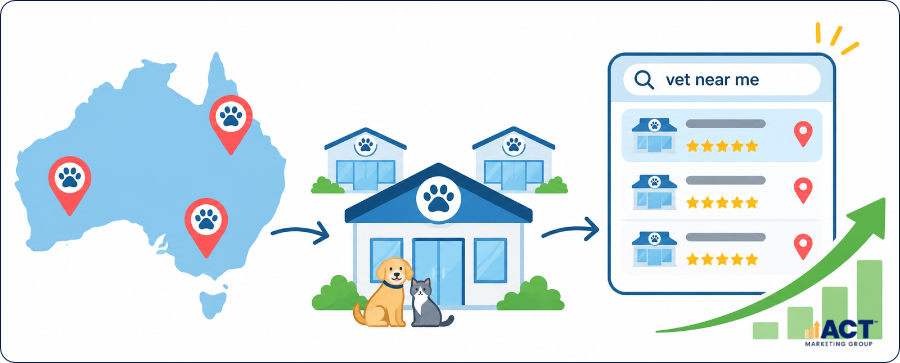
Accurate business profiles are most useful when they connect to equally reliable clinic web pages. For multi-location veterinary groups, individual location pages help search engines distinguish between clinics while giving visitors the information needed to choose an appropriate practice. A common mistake is directing every local search to the group's homepage, even when users want details about a particular clinic. Dedicated location pages provide opportunities to address local search intent without relying on repetitive descriptions or keyword stuffing.
Each Clinic Page Should Reflect Actual Services
Location pages should explain what makes a clinic relevant to the people searching within its service area.
Repeated Content Can Reduce Local Relevance
Using the same descriptions across many location pages may limit their usefulness to both visitors and search engines. A shared template can support consistent branding, but each page should include meaningful local details. For example, a clinic providing veterinary dentistry may need different content from another location offering general consultations and preventive care.
Search Intent Should Guide Veterinary Content Creation
Once location pages are established, veterinary groups can develop a content strategy around the questions and services most relevant to their communities. Search intent explains what someone is trying to achieve, whether they need a nearby appointment, want to understand a procedure, or are comparing veterinary care options.
Keyword research should therefore consider the relationship between search demand and actual clinic capabilities rather than focusing exclusively on search volume. Creating content for services that are unavailable at a particular location can generate unsuitable enquiries and reduce the usefulness of the website.
Topical Authority Develops Through Useful Information
Topical authority involves developing a reliable collection of related content that demonstrates knowledge of a particular subject. For veterinary groups, this may include connected articles about preventive health, vaccination schedules, dental care, and common veterinary procedures. Content should offer clear explanations, acknowledge clinical limitations, and link readers to appropriate services without encouraging unnecessary treatment.
Technical SEO Supports Consistent Performance Across Locations
A well-planned content strategy also depends on technical SEO, which helps search engines access and understand website information. For multi-location veterinary groups, technical problems can affect several clinics simultaneously when location pages share the same website structure. Regular technical reviews can identify broken links, inaccessible pages, incorrect redirects, and mobile usability problems. Addressing these issues supports traditional SEO while making clinic information easier to access through different search experiences.
Technical SEO also plays an important role in helping veterinary clinics maintain local search visibility. Explore our guide to Technical SEO for Veterinary Websites for practical insights into improving website performance, accessibility, and search engine visibility.

Structured Data Helps Explain Business Information
Structured data is a standardised way of describing information on a webpage so search engines can interpret it more easily. Veterinary groups can use appropriate business-related structured data to identify clinic addresses, operating hours, and other supported details. The information must match the visible website content, and structured data alone does not guarantee higher Google rankings or inclusion in AI-generated answers.
Zero-Click Searches Are Changing SEO Performance Measurement
Beyond website performance, veterinary groups need to consider how search engines increasingly present information directly within search results. Zero-click searches occur when users find an answer or complete part of their task without visiting a website.
Google's results may display operating hours, contact details, directions, featured snippets, or AI-generated summaries. Although these interactions may be useful to prospective clients, they also mean that organic traffic alone cannot fully describe a clinic's search visibility.
Website Traffic Does Not Capture Every Interaction
A pet owner may find a clinic through Google Maps and request directions without opening the website. Likewise, someone may use a telephone number displayed in a business profile rather than visiting the clinic's contact page. These actions can represent meaningful engagement even though they do not appear as ordinary organic website visits.
Traditional Metrics Need Supporting Local Data
Veterinary SEO reporting should consider both website activity and interactions that take place directly within search results. Useful measures include:
Organic traffic to individual clinic pages.
Local keyword rankings and search visibility.
Google Business Profile website clicks and direction requests.
Recorded telephone enquiries and online bookings.
Branded search volume where reliable data is available.
Enquiry quality and appointment conversion rates.
This combination helps distinguish visibility from measurable clinic outcomes.
Have Questions?
We're Here to Help!
Brand Authority and Content Quality Support Long-Term Visibility
As search engines and AI systems process more information, veterinary groups benefit from maintaining accurate content and a clearly identifiable professional presence. Brand authority develops through consistent information, genuine expertise, and the wider reputation of the organisation. Google's guidance on helpful content discusses experience, expertise, authoritativeness, and trustworthiness, often referred to as E-E-A-T. These are useful principles for assessing content quality, particularly when publishing veterinary health information, rather than a separate checklist that guarantees ranking success.
Veterinary Expertise Should Be Clearly Demonstrated
Clinic websites should make it easy for visitors to understand who provides care and what services are available. This may include practitioner biographies, professional qualifications, clinical interests, and factual explanations of veterinary procedures. Any claims about experience or specialist status should be accurate and supported by the practitioner's actual qualifications and professional standing.
AI-Generated Content Requires Professional Review
AI content can assist with early drafts, outlines, and organising existing information, but content quality depends on accuracy and usefulness rather than the method used to produce it. SEO teams should ensure that published material reflects real clinic services, avoids unsupported clinical claims, and provides practical information. Human review remains particularly important when content discusses animal health, treatment suitability, or potential outcomes.
Multi-Location SEO Requires Coordination Between Teams
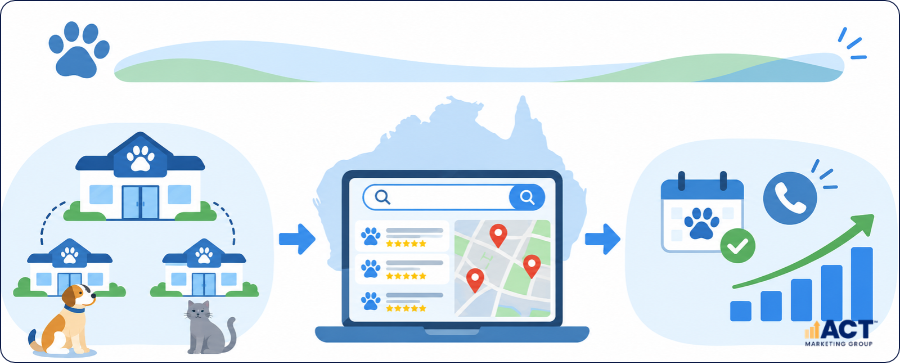
Strong content and technical foundations need to be maintained as veterinary organisations expand. A coordinated SEO strategy allows the central marketing team to manage shared standards while individual clinics remain responsible for verifying operational information.
Without clear responsibilities, marketing content can become outdated when clinic hours change, veterinarians join or leave, or certain services become unavailable. Establishing an approval process helps ensure that published information continues to reflect actual practice operations.
Clear Responsibilities Improve Information Accuracy
Different teams contribute to local SEO success in different ways.
SEO Tools Help Identify Practical Priorities
SEO tools can help teams assess local rankings, website traffic, technical issues, and content performance across multiple locations. However, reports require interpretation. A clinic with lower organic traffic may operate in a smaller market, while a busy metropolitan practice may receive substantial enquiries without achieving the same visibility for every target keyword.
Clinic-Level Performance Provides More Meaningful SEO Insights
Once responsibilities are established, the next step is measuring whether local SEO activities support business objectives. Veterinary groups should evaluate each clinic's search performance alongside its services, location, appointment capacity, and competitive environment. Traditional metrics such as keyword rankings and average click-through rate remain useful, but they should not be assessed in isolation. Changes in search features, branded queries, and user behaviour can affect these measures without indicating an equivalent change in appointment demand.
Location Comparisons Need Relevant Benchmarks
A regional veterinary clinic may have different search opportunities from a metropolitan practice serving a densely populated area. Rather than applying identical ranking targets to every location, groups should evaluate progress against each clinic's previous performance, relevant search terms, and operational goals. This provides a more useful basis for deciding where further investment may be appropriate.
Enquiry Quality Matters Alongside Search Visibility
Higher search visibility does not automatically lead to more suitable appointments. For example, increased traffic to an emergency veterinary page may have limited business value if the clinic does not provide emergency services. Reviewing enquiry types, booking outcomes, and service availability can help marketing teams identify where search strategy and clinic operations need better alignment.
Strengthening Local SEO Across Your Veterinary Group
For veterinary group owners and practice managers, the next step is to assess how consistently each clinic appears across search engines, Google Business Profiles, and the organisation's website. Prioritising information accuracy, service relevance, and meaningful performance measurements can support a more sustainable approach to SEO. ACT Marketing helps Australian businesses develop practical search engine optimization strategies informed by their markets, services, and business objectives.