

Digital Marketing Checklist for Australian Dental Clinics In 2026: SEO, Social and Ads gives dental practice owners a practical way to review their online presence, patient acquisition, and marketing compliance before investing more budget. In the digital age, a dental clinic needs more than a visible website; it needs a clear strategy that connects SEO, social media, paid advertising, email marketing, and patient communication without making exaggerated or unsupported claims. For an Australian dental practice, digital marketing must balance growth with accuracy, privacy, and professional standards.
Start With a Practical Marketing Strategy Before Choosing Channels
A successful digital marketing strategy should begin with your clinic’s goals, not the latest platform trend. Before you focus on SEO, paid search, social media marketing, or content creation, your practice needs to clarify its target audience, core services, brand identity, and the types of patients it is trying to attract. This matters because a dental clinic has different priorities from a general small business or larger business selling low-risk products online. Your marketing strategy should reflect the patient journey, from early search intent and comparison through to booking, treatment discussion, follow-up, and long-term trust.
Get a Customized Marketing Strategy for Your Business
Schedule a free consultation to discuss how our digital marketing solutions can help you reach more customers.
Keep Compliance at the Centre of Every Marketing Activity
Once the strategy is clear, every marketing activity should be checked for accuracy, balance, and professional restraint. Dental advertising should avoid testimonials in practice-controlled assets, unrealistic treatment expectations, pressure-based offers, inducements without clear terms and conditions, or claims that cannot be properly supported. This does not mean your marketing needs to be plain or ineffective. It means your brand story, website copy, online ads, social media channels, and email marketing should explain your services clearly while respecting that every patient’s suitability, outcome, and treatment pathway may differ.
Build a Website That Supports Search and Patient Decisions
Your website is still an essential part of online marketing because it is usually where prospective patients assess your clinic before making contact. A strong website should explain who you help, what services you provide, where your clinic is located, how appointments work, and what patients can expect from the process. The website’s user experience also affects how well your other digital channels perform. If your paid advertising sends visitors to a slow page, unclear service information, or a form that is difficult to use on mobile, your traffic volume may increase without improving lead generation or bookings.
Align SEO with Local Search Intent
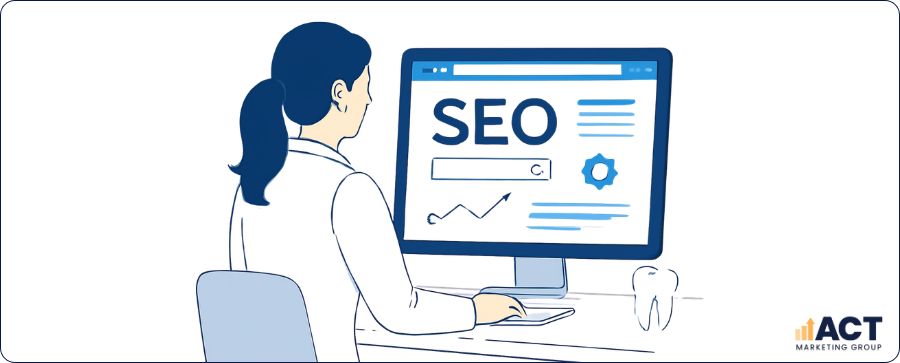
After the website foundation is in place, SEO should help your clinic appear for relevant searches in your service area. This includes the way your pages are structured, how clearly your services are described, how well your location is communicated, and whether your content answers real patient questions. For an Australian dental clinic, search engine visibility is most valuable when it matches patient intent, and carefully written meta titles and descriptions that boost click-through rates are an important part of this. A person searching for an emergency dentist, children’s dental appointment, dental implant consultation, or teeth whitening information may be at a different stage of the customer journey, so each page should be written with that context in mind.
Use Content Marketing to Build Trust Over Time
Content marketing can be a cost-effective way to support patient education, SEO, and brand preference when it is planned carefully. A strategic content marketing approach for a dental clinic should focus on useful explanations rather than generic promotional articles. Good content helps target customers understand their options, prepare for appointments, and know when clinical advice is needed. For example, a page about clear aligners should explain general suitability factors, consultation steps, and limitations, while avoiding language that implies a guaranteed cosmetic result.
Create A Social Media Strategy with a Clear Purpose
Social media can be a powerful tool for building familiarity, but it should not be treated as a place to say things your website would not say. A measured social media strategy may include oral health education, clinic updates, team introductions, appointment reminders, community involvement, and simple explanations of common dental topics. The key is to use social media channels in a way that supports your broader marketing strategy. Influencer marketing, patient stories used to promote services, and highly visual treatment claims can create compliance risks for dental clinics, and testimonials must not be used in advertising regulated health services. Your social media marketing should focus on useful, factual content that supports informed decisions without relying on hype.
Plan Paid Advertising Around the Patient Journey
Paid advertising can support patient acquisition when it is connected to clear landing pages, appropriate search terms, and careful message control. Paid search and online ads are most useful when they help people who are already looking for a service find relevant information and take a practical next step.
For dental clinics, search engine marketing should usually focus on location, service availability, appointment access, and consultation-based language. A campaign for emergency dental care, for example, needs a different page, message, and performance review process from a campaign for general check-ups or cosmetic treatment discussions.

Use Email Marketing Carefully and Relevantly
Email marketing can help your clinic maintain communication with existing patients, but it should be handled with consent, clear sender identification, an easy unsubscribe option, privacy, and relevance in mind. It may support recalls, general oral health reminders, appointment preparation, practice updates, and education that helps patients stay informed. The strongest email approach is usually simple and practical. Instead of sending frequent promotional messages, create communications that improve the customer experience, support the customer lifecycle, and give patients useful information at the right time.
Choose Marketing Technology That Helps You Review Performance
Marketing technology should make your decisions clearer, not more complicated. Tools such as Google Analytics, call tracking, form tracking, reporting dashboards, and booking data can help your practice review performance across SEO, paid advertising, content marketing, and social media, provided they are configured with privacy, consent, and health information handling in mind. The important step is to identify which numbers actually matter to the practice. Impressions, clicks, and traffic volume can be useful, but your clinic also needs to understand enquiry quality, booked appointments, cost per lead, service interest, and whether campaigns are attracting the right audience.
Connect Brand Identity with Patient Experience
Your brand is not only your logo, colours, or wording style. For a dental practice, brand identity is shaped by how consistently patients experience your clinic across the website, phone calls, online forms, social media, appointment reminders, and treatment discussions. This is where digital marketing and customer experience meet. If your online presence promises calm, clear, and professional care, the booking process, reception communication, and follow-up experience should support that same message.
Review Earned Media and Reputation Without Reusing Testimonials
Earned media, local mentions, community involvement, and third-party reviews can all influence how prospective patients perceive your clinic. However, dental practices should not republish testimonials, patient praise, or review screenshots in advertising assets they control. A safer approach is to focus on professional reputation signals that do not rely on patient praise as advertising. This may include accurate practitioner profiles, clear service information, community participation, educational content, and consistent local business information across relevant platforms.
Turn The Checklist into a 90-Day Process
The ultimate digital marketing checklist is only useful if it becomes part of a repeatable process. A clinic does not need to fix every channel at once, but it should create a clear order of work so improvements can be completed, reviewed, and adjusted. In the first month, your practice may focus on compliance, website clarity, Google Business Profile optimisation and accuracy, and basic analytics tools. In the second month, you might improve content marketing, paid search structure, and landing pages, while the third month can focus on reporting, campaign refinement, and the next stage of customer acquisition.
Have Questions?
We're Here to Help!
Keep Campaigns Focused on Quality Rather Than Volume
As your marketing campaigns develop, it can be tempting to chase more traffic, more clicks, and more impressions. For a dental clinic, success is usually better measured by the quality of enquiries, the suitability of patients, and whether marketing activities support long-term practice goals. A cost-effective approach does not always mean spending less. It means allocating budget to the digital channels that attract relevant patients, support your brand, and give you enough data to make informed decisions about what to continue, pause, or improve.
Refine Your Digital Marketing Checklist for 2026
A strong digital marketing checklist for Australian dental clinics in 2026 should bring together SEO, social media, paid advertising, content marketing, email marketing, analytics, and compliance in one clear system. Each channel has a role, but none should operate separately from your broader marketing strategy or patient experience. The next step is to review your current website, social media channels, paid search campaigns, email templates, reporting setup, and service pages against this checklist. From there, your practice can identify priority fixes, create a more consistent brand story, and focus marketing effort where it is most likely to support useful enquiries.

Strengthen Your Dental Marketing Strategy with a Clearer Checklist
ACT Marketing helps Australian dental practices create practical, compliance-aware digital marketing systems across SEO, social media, paid advertising, and content marketing. For clinics that want a clearer path forward, a structured checklist can help turn scattered marketing activities into a more focused, measurable process. Your clinic does not need to use every digital channel at once to succeed. It needs a careful strategy, accurate content, appropriate advertising, and regular performance review so each marketing decision supports the patients you want to reach and the practice you want to build.