

Monthly Digital Marketing Checklist to Keep Your Vet Clinic Visible Across Google, Social Media, and Email is a practical digital marketing checklist that helps an Australian vet clinic maintain a steady digital presence without relying on last-minute marketing campaigns. It gives you a repeatable marketing checklist for Google, social media marketing, and email marketing, so visibility doesn’t drift when the clinic gets busy.
Most clinics don’t need more marketing ideas; they need a simple system that matches real capacity and still supports business growth. This article sets out a clear monthly rhythm that aligns to your target audience, reduces common pain points (like “we forgot to post” or “Google dropped”), and makes it easier to measure campaign success with a small set of key performance indicators.
Anchor The Month with One Simple Digital Marketing Strategy
Now that you’re using a monthly checklist, the next step is to anchor it to a clear digital marketing strategy that your team can repeat. The simplest approach is to define your target market for the next 30 days, choose one or two business goals (for example: more dental enquiries or smoother puppy vaccine bookings), and look for content gaps you can fill while you keep the rest of your marketing activities aligned to those priorities.
A strong digital marketing strategy doesn’t try to do everything at once; it focuses on what your clinic can deliver consistently and safely. If the diary is already full, the strategy might shift from lead generation to retention, recall reminders, and improving conversion rates on existing traffic rather than pushing more campaign launch activity.
Get a Customized Marketing Strategy for Your Business
Schedule a free consultation to discuss how our digital marketing solutions can help you reach more customers.
Refresh Your Understanding of the Target Audience in 15 Minutes
Now that your strategy is clear, the next step is a quick monthly check of your target customers based on real clinic signals. This is light market research, not a big project, and it keeps your content strategy and messaging grounded in what pet owners are asking right now.
Use what you already hear and see: frequent reception questions, repeat concerns in consults, and seasonal patterns that affect demand. When you maintain this clear understanding of your specific audience, it becomes much easier to craft content that feels relevant, stays free of exaggeration, and leads naturally to sign-ups, calls, or bookings.
Protect Google Visibility with a Tight SEO Strategy Routine
Now that you know who you’re speaking to and what you’re trying to achieve, the next step is protecting visibility on Google because it’s where intent is highest. A practical SEO strategy for a vet clinic combines basic accuracy, keyword research for relevant keywords, and steady on page SEO improvements to the pages that matter most.
Keep it simple and repeatable: ensure your key details are correct, ensure your service coverage is clear, and ensure your website is technically sound enough that Google can trust and display it. If you only do one thing this month, make sure your clinic information is consistent across your Google listing and website, because inconsistencies create avoidable friction for both search engines and pet owners.
Keep Your Website Healthy with Technical SEO and On Page SEO Basics
Now that Google visibility is protected at the listing level, the next step is ensuring your website converts that visibility into enquiries. Many clinics lose qualified leads because landing pages don’t match the promise of the search, mobile responsiveness is poor, or the booking path has too many steps.
Your monthly website routine should prioritise technical SEO fundamentals that affect user experience and trust: site speed, fast loading speed on mobile, mobile friendly layouts, and fixing broken links, along with steadily solving common technical SEO issues. Alongside that, keep on page SEO clean and accurate by maintaining meta tags, and ensuring the next step is obvious for the target audience.

Track a Small Set of Performance Metrics to Measure Campaign Success
Now that the foundations are stable, the next step is measurement that supports decisions rather than reporting for its own sake. You can measure campaign success without complex attribution models by using a consistent set of key performance indicators that reflect real outcomes.
Use Google Analytics and other analytics tools to check where enquiries are coming from, whether conversion tracking is working, and whether conversion rates on your most important pages are improving or slipping. If you’re running paid advertising or paid ads, keep the same conversion tracking approach so you can compare organic search and paid results fairly and control ad spend with evidence rather than assumptions.
Run Social Media Marketing as a Distribution System with a Content Calendar
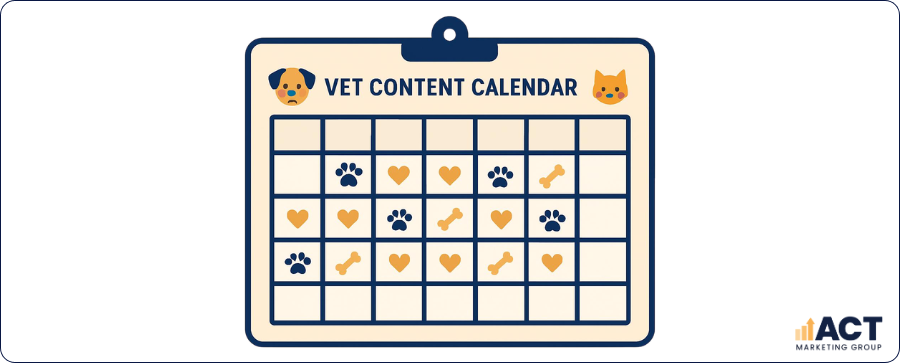
Now that you’re measuring outcomes, the next step is making social media marketing predictable. A clinic-friendly social media strategy relies on a simple content calendar that repeats proven themes, rather than trying to invent a new angle for every post.
The most reliable approach is to keep social media posts tied to pet-owner needs and clinic capacity: seasonal prevention, “what to expect” education, and practical reminders that reduce anxiety and confusion. Over time, this supports community engagement, keeps your audience engaged, and helps raise brand awareness locally without relying on influencer partnerships or forcing trends that don’t fit your clinic.
Use Email Marketing to Stabilise Retention and Reduce Reliance on New Leads
Now that social distribution is steady, the next step is email marketing because it’s one of the few channels you control end-to-end. For vet clinics, email campaigns are often most effective when they support recall rhythms, follow-ups, and education that helps pet owners make timely decisions.
Keep the workload manageable by starting with light segmentation that reflects real needs, such as “puppy/kitten”, “parasite prevention”, “dental”, or “senior pets”. When email campaigns link to relevant content and clear landing pages, they support conversion rates and reduce the pressure to constantly create new marketing campaigns for lead generation.

Decide When Paid Advertising Supports the Month and When It Doesn’t
Now that organic and retention channels are working, the next step is deciding whether paid advertising is necessary this month. Paid ads can be helpful when you need faster visibility for a specific service, but they perform best when the rest of your marketing strategy is already stable.
If you run a digital marketing campaign via paid advertising, keep it narrow: one priority, one target audience, one landing page, and consistent conversion tracking. If you can’t clearly measure campaign success, or if your diary is already full, it’s usually better to focus on organic search improvements, email marketing, and website conversion fixes before increasing ad spend.
Keep Reviews and User Generated Content as a Simple Monthly Habit
Now that acquisition and retention are covered, the next step is protecting trust. Reviews and other user generated content influence whether pet owners choose your clinic, but the workflow needs to be consistent and calm, not reactive.
A practical approach is to choose a predictable moment to request feedback, respond to reviews professionally each week, and treat recurring complaints as operational pain points to resolve. This improves your digital presence over time and supports both social proof and lead generation without needing aggressive marketing campaigns.
Have Questions?
We're Here to Help!
Build One Monthly Content Marketing Asset That Feeds Every Channel
Now that the system is in place, the next step is content marketing that compounds instead of creating more work. One strong piece of relevant content per month can support organic search, provide material for social media posts, and give your email campaigns something genuinely useful to link to.
Choose topics based on keyword research and what clients are already asking, then write that matches your clinic’s tone. Over time, a steady content strategy like this improves search visibility, strengthens your service pages, and builds a library that supports measurable growth without needing constant campaign launches.

Monthly Digital Marketing Checklist Support for Australian Vet Clinics
If you want this monthly digital marketing checklist implemented as a working system, ACT Marketing can translate it into a practical marketing strategy for your clinic’s services and capacity. That usually means tightening your SEO strategy (including on page SEO and technical SEO), improving landing pages for mobile responsiveness and fast loading speed, and setting up conversion tracking so you can measure campaign success without guesswork.
A sensible first step is to review your current digital presence across Google, your highest-value website pages, your email marketing setup, and the last 30 days of performance metrics. From there, you can focus on the few changes most likely to improve conversion rates and deliver measurable growth.