

Google Maps ranking for multi-location dental groups in Australia requires consistent business information, accurate Google Business Profiles, location-specific website content, and ongoing local SEO monitoring. For dental groups managing several clinics, the challenge is improving local visibility while ensuring each practice appears in relevant local search results without creating inconsistencies across the network.
Multi-Location Dental Groups Need a Location-Specific Google Maps Strategy
Managing Google Maps ranking becomes more complex as your dental group expands because every clinic operates within a different local market. A practice in Canberra may face different local competitors, patient search patterns, and geographical conditions from another location in Sydney or Melbourne. Google identifies relevance, distance, and prominence as the main factors influencing local rankings. As these factors vary between locations, strong Google Maps visibility for one dental clinic does not guarantee comparable visibility for other practices within the same group.
Get a Customized Marketing Strategy for Your Business
Schedule a free consultation to discuss how our digital marketing solutions can help you reach more customers.
Local Search Results Vary Between Clinic Locations
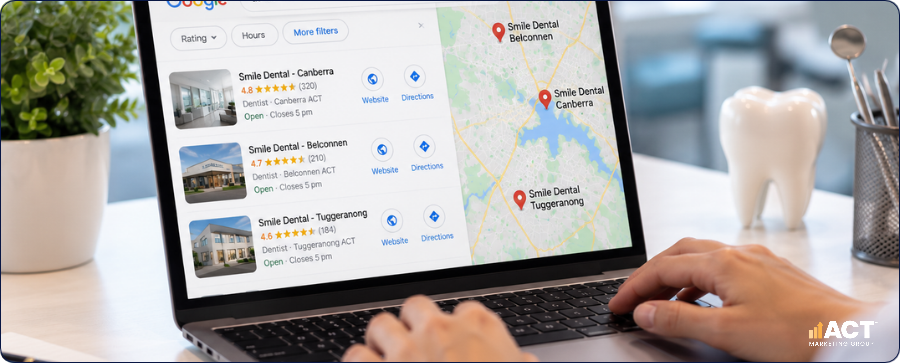
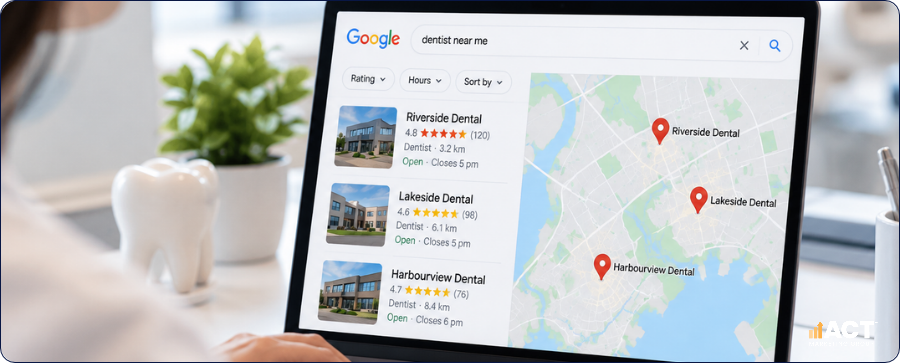
When patients search for dental services, Google may display a map pack featuring nearby practices alongside other search results. The businesses shown can change depending on the search term, the person's location, and how closely each clinic matches the search.
For example, a dental group operating clinics in Belconnen, Gungahlin, and Woden should assess each location separately. A clinic appearing prominently in one suburb may have limited visibility elsewhere because proximity signals influence which businesses Google displays.
Accurate Google Business Profiles Establish the Foundation for Local Rankings
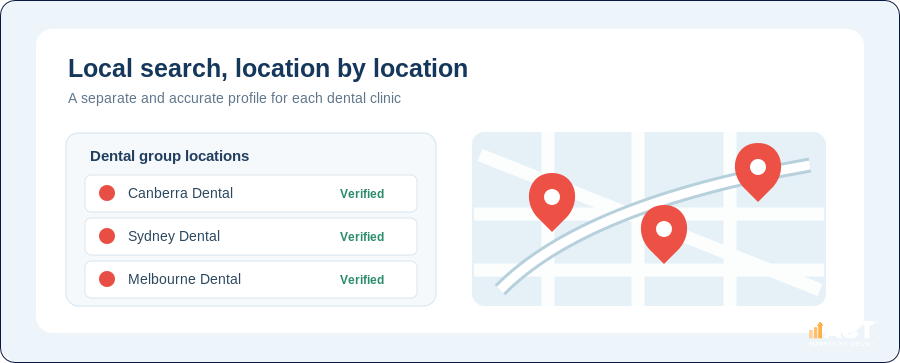
Once the differences between local markets are understood, the next priority is establishing a reliable Google Business Profile for every eligible clinic. Each Google Business Profile should represent an eligible, genuine business location with accurate service information, business hours, and contact details. Clinics should use their actual business address and maintain information consistent with Google's Business Profile guidelines.
Google Business Profile optimization begins with data accuracy rather than adding more keywords. An incomplete profile, incorrect business address, or outdated telephone number can create confusion for patients and make it harder to maintain a consistent online presence.
Consistent Information Supports Multiple Locations
Dental groups may share branding and administrative systems, but individual clinics can have different practitioners, treatments, and operating hours. Maintaining accurate location-specific information helps patients contact the correct practice and reduces discrepancies between Google Maps, the clinic website, and other business listings. A centralised approval process should therefore support consistency without making every profile identical.
Local Keywords Connect Individual Clinics With Relevant Patient Searches
After establishing accurate profiles, the next stage is improving the relevance of each clinic to the searches patients make. Relevant local keywords help communicate which dental services are available at a particular business location. Using these terms naturally within accurate clinic information and service pages can support relevance to local searches.
However, adding keywords repeatedly does not automatically improve business ranking. The priority should be communicating the services genuinely available at each location using clear, natural language.
Service Categories Reflect Actual Clinical Availability
Each clinic should use the most specific primary category that accurately represents its core business. Locations within the same dental group should maintain consistent categories when providing the same main service, with additional categories reflecting genuine business activities.
Depending on the treatments genuinely available and the qualifications and scope of practice of the treating practitioners, appropriate service information may include:
General dental examinations and preventive care.
Restorative dental treatments.
Emergency dental appointments, where available.
Dental implants and related consultations.
Children's dental care.
Orthodontic services, where appropriately provided.
Service descriptions should explain what patients can enquire about without promising particular results or suggesting treatment suitability before clinical assessment.
Location-Specific Keywords Support Clearer Search Relevance
Relevant local keywords may include dentist Belconnen, dental clinic Gungahlin, or emergency dentist Woden, provided the practice operates in the relevant area and offers those services. Emergency-related terms should reflect actual appointment arrangements and clinical availability. Use these phrases naturally in location pages, relevant headings, and service descriptions.
Rather than repeatedly inserting suburb names, provide more detail about the clinic, appointment options, and facilities that matter to local patients.
Dedicated Location Pages Strengthen The Connection Between Google Maps And Your Website
An accurate Google Business Profile provides important business information, but the corresponding website page gives patients additional context. Each clinic should have a dedicated location page that explains where it operates, which services are available, and how appointments can be arranged.
For dental groups managing multiple locations, linking each Google Business Profile to its corresponding clinic page helps patients find relevant information and supports consistency between business listings and website content.
Original Local Content Provides More Value Than Repeated Suburb Pages
Publishing several nearly identical pages and changing only the suburb name provides limited additional value. Instead, describe genuine differences between locations, such as transport access, parking facilities, practitioner availability, and appointment arrangements. For example, one clinic may operate extended hours while another offers a different range of services. Accurate distinctions help patients identify a suitable location and make each page more useful.
Responsible Google Review Management Protects Advertising Compliance
Once clinic profiles and website pages are established, review management becomes another part of the local SEO strategy. Google reviews can contribute to a business's prominence, but dental practices must manage them within Australian healthcare advertising requirements.
Under section 133 of the National Law, advertising regulated health services must not use prohibited testimonials. These include positive statements or recommendations about clinical aspects of treatment, diagnosis, symptoms, or outcomes used in advertising. Dental groups must distinguish independent reviews from testimonials used in their own marketing.
Independent Reviews And Promotional Testimonials Require Different Treatment
Patients may independently publish Google reviews describing their experiences. Dental practices are generally not responsible for unsolicited testimonials on independent platforms they do not control, but must not use clinical testimonials in their own advertising. Non-clinical comments about administration or communication are not automatically prohibited testimonials.
Under Google's review policies, dental clinics must not offer incentives in exchange for reviews, regardless of rating. They must also avoid selectively requesting positive reviews or discouraging negative feedback.
Public Responses Must Protect Patient Confidentiality
A practical review management process should include:
Monitoring feedback for operational concerns.
Avoiding public confirmation of patient relationships.
Not disclosing clinical or appointment information.
Escalating complaints through appropriate internal processes.
Avoiding promotional reuse of clinical testimonials.
Keeping responses neutral and respectful.
Where a response is appropriate, it should avoid discussing individual treatment details, even when a reviewer has disclosed them voluntarily.
Accurate Local Directories Help Maintain A Consistent Business Presence
Beyond Google Business Profiles, dental groups should maintain reliable information across relevant local directories and other established websites. Business listings can help patients locate clinics and confirm essential details. The objective is not to create the largest possible number of directory listings. It is to maintain accurate information on platforms genuinely relevant to the business and its patients.
Genuine Local Relationships Support Wider Visibility
Dental groups may also develop connections through professional associations, community education, and relevant local initiatives. Where these activities lead to legitimate references from other websites, they may contribute to a clinic's broader online presence. Avoid purchasing links or creating artificial business listings purely to influence Google ranking. Local SEO should reflect genuine business activity.
Location-Based Rank Tracking Provides A Clearer View Of Google Maps Visibility
After improving profile accuracy and local content, the next stage is monitoring how each clinic appears across its surrounding suburbs. Google Maps ranking can vary significantly between geographical points, so checking one keyword from a single location provides an incomplete picture.
A Google Maps rank checker or map rank tracker can help identify where a clinic appears in local search results. These local SEO tools are particularly useful for dental groups comparing visibility across multiple locations.
A Local Search Grid Shows Geographical Ranking Differences
A local search grid displays business ranking positions across several map points within a selected area. For example, a tool such as Local Falcon can help assess how a Belconnen clinic appears for "dentist Belconnen" across nearby streets and suburbs. The grid size should reflect the geographical area being assessed. An unnecessarily large grid may include locations where distance makes prominent rankings less likely.
Consistent Tracking Makes Ranking Changes Easier To Interpret
To monitor ranking progress, use the same local keywords, map points, and reporting intervals. Search history, user location, and other factors can influence individual Google search results, so automated scan results may differ from what a particular patient sees. Use rank tracking to identify patterns rather than treating one ranking position as a definitive measure of performance.
Have Questions?
We're Here to Help!
Local Competitor Analysis Helps Identify Practical Improvements
Once location-based reporting is established, dental groups can examine how their clinics compare with local competitors. Competitor insights can reveal differences in profile completeness, location pages, service information, and search visibility. However, ranking higher than another practice for one search term does not automatically mean a clinic is generating more patient enquiries. Comparisons should focus on factors that can inform useful improvements.
Local SEO Performance Should Be Measured Beyond Keyword Rankings
After reviewing local competitors, performance reporting should connect search visibility with meaningful clinic activity. Google Maps rankings show where a business appears, but they do not establish how many patients make enquiries or book appointments. Google Business Profile performance reporting and Google Search Console provide useful information about how users discover and interact with your clinics.
Each Clinic Needs an Appropriate Performance Baseline
A metropolitan clinic may attract more searches than a smaller suburban practice, but higher search volume does not necessarily indicate better SEO performance. Compare each location against its previous results, available services, appointment capacity, and competitive conditions. This approach helps distinguish changes in local visibility from broader differences between clinics.
Selecting Local SEO Tools According To Operational Needs
As reporting requirements increase, dental groups may benefit from additional local SEO tools. However, managing multiple locations does not automatically require a full suite of paid software. Free tools, including Google Business Profile reporting and Google Search Console, provide useful starting information. Paid platforms can offer additional geographical rank tracking, competitor insights, and reporting functions.
Before selecting software, review location limits, supported keywords, reporting frequency, and available pricing or custom pricing arrangements. Choose a tool based on the information your team needs to make decisions, rather than the number of features advertised.
Strengthening Google Maps Ranking Across Your Dental Group
Improving Google Maps ranking across multiple dental clinics requires accurate business profiles, location-specific content, responsible review management, and consistent performance tracking. Each clinic operates within a different local market, making individual assessment essential even when locations share the same brand. A coordinated approach helps dental groups maintain reliable information while allowing each practice to reflect its genuine services, facilities, and patient needs.
Develop Your Multi-Location Dental Google Maps Strategy with ACT Marketing
ACT Marketing helps Australian businesses develop practical SEO strategies focused on search visibility, relevant enquiries, and measurable performance. For dental groups, an appropriate starting point is a multi-location SEO audit covering Google Business Profiles, location pages, local rankings, directory accuracy, and reporting processes. Contact ACT Marketing to discuss a Google Maps strategy aligned with your clinic locations, operational requirements, and Australian healthcare advertising obligations.