

10 Online Marketing Tools Every Australian Vet Clinic Should Use in 2026 are practical platforms that help your clinic improve local visibility, track enquiries, manage client communication, and review marketing performance. For many Australian vet clinics, the challenge is not finding more digital marketing tools, but choosing the right marketing tools for your team, budget, and client needs. As a vet, practice owner, or clinic manager, you need software that supports your team without adding unnecessary work. A useful tool should help your clinic manage search visibility, social media, email marketing, landing pages, or reporting in a way your team can understand and maintain.
A Practical Vet Marketing Stack Starts with Clear Priorities
Before choosing digital marketing tools, decide what each platform needs to do. Your clinic may need help with local search, website traffic, email reminders, social posts, online advertising, or campaign management. The right digital marketing software is not always the one with the longest feature list. It is the one your clinic can use consistently, review regularly, and connect to real actions such as calls, bookings, form submissions, or client enquiries.
Get a Customized Marketing Strategy for Your Business
Schedule a free consultation to discuss how our digital marketing solutions can help you reach more customers.
Google Business Profile Supports Local Search First
Once your priorities are clear, Google Business Profile is usually the first tool to review. It helps your clinic appear when local pet owners search for nearby veterinary services on Google Search and Maps. Your profile should include accurate opening hours, contact details, service categories, photos, emergency information, and links to useful website pages. Review it monthly so pet owners are not relying on old information when they need to contact your clinic.
If you want to explore this in more detail, read our article on Google Business Profile for veterinary clinics to see how your profile can support local visibility, client enquiries, and more accurate practice information
Tool 1: Google Business Profile
Google Business Profile helps your clinic appear in local search when people look for services such as vaccinations, desexing, dental checks, senior pet care, or emergency advice. It also gives pet owners quick access to your phone number, directions, website, and service details. The common mistake is treating the profile as a one-time setup task. Check holiday hours, photos, service descriptions, questions, and contact details regularly so the profile reflects how your clinic actually operates.
Measurement Tools Show What Your Website Is Doing
After local visibility, your clinic needs clear measurement. Without web analytics, it is difficult to know whether your digital marketing is leading to useful enquiries or only increasing visits to the website. Google Analytics, Google Search Console, and simple data visualisation tools can help your team review the site’s performance across multiple channels. These analytics tools are most useful when they focus on decisions, not long reports.
Tool 2: Google Analytics
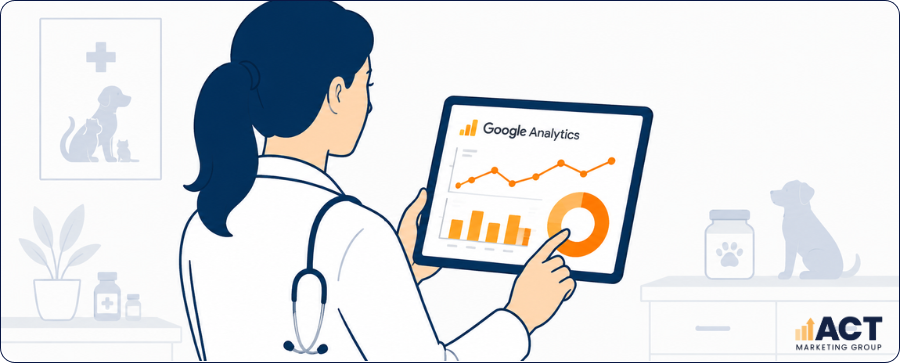
Google Analytics helps your clinic understand website traffic, user behaviour, and the path people take before making an enquiry. It can track actions such as booking button clicks, form submissions, phone clicks, and visits to key service pages. The common mistake is only looking at page views. A smaller number of visitors who call, book, or submit a form is usually more useful than higher traffic that does not lead to client action.
Tool 3: Google Search Console
Google Search Console helps you see how your website appears in Google Search. It can show search queries, page clicks, impressions, and changes in keyword rankings over time. For a vet clinic, this can show whether your website is being found for searches such as “puppy vaccinations”, “dog dental cleaning”, “cat desexing”, or “vet near me”. Use Search Console to monitor keyword rankings, improve important pages, and guide your search engine optimisation work.
Tool 4: Looker Studio
Looker Studio can turn data from Google Analytics, Search Console, Google Ads, and other tools into a clear reporting dashboard. This helps clinic owners and practice managers review results without opening multiple accounts every week. The common mistake is building a dashboard with too much information. Keep it focused on website enquiries, traffic sources, landing pages, service page performance, and campaign results.
If you want to understand how paid search is changing for veterinary practices, read our article on Google Ads updates for vet clinics to see how campaign structure, AI-powered features, tracking, and search term controls can support more relevant client enquiries.

SEO Tools Help Clinics Plan Content Around Real Searches
Once your measurement is working, SEO tools can help your clinic understand what local pet owners are searching for. Keyword research should guide service pages, blog topics, and content creation rather than relying only on internal assumptions. Good keyword research is not about covering every pet care topic. It is about finding searches that match your services, location, clinical capacity, and the questions clients already ask your team.
If you want to explore this in more detail, read our article on Long-Tail Keywords in Australia to learn how specific search phrases can support clearer search intent, more relevant website traffic, and stronger SEO planning for your business.
Tool 5: SEO Tools For Keyword Research and Page Planning
SEO tools such as Semrush, Ahrefs, SE Ranking, Moz, or similar platforms can help with keyword research, keyword difficulty scores, competitor review, search rankings, and content planning. They can also help your team find gaps in service pages and monitor keyword rankings over time. For example, “dog dental cleaning cost” may need a different page from “dog bad breath” because the intent behind the search is different. The common mistake is creating broad articles that attract anonymous website visitors but do not support local bookings or service enquiries.
Content Creation Tools Help Clinics Stay Consistent
With your keywords and service priorities mapped, content creation tools can help your team produce useful assets without needing a designer for every update. This can be useful for small businesses and independent clinics where staff are already managing clinical, reception, and operational work. Content should be simple, accurate, and easy for pet owners to understand. Regular social posts, service explainers, seasonal reminders, and visual content are usually more useful than occasional bursts of activity with no clear plan.
Tool 6: Canva
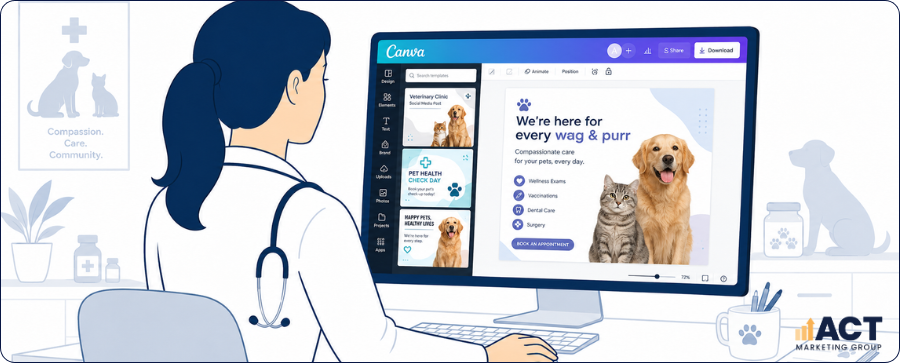
Canva is a practical content creation tool for social posts, email graphics, waiting room posters, client education assets, and simple campaign visuals. Its drag and drop editor can help non-designers create materials using approved clinic colours, templates, and wording. The common mistake is making designs too busy or too promotional. Use plain language, clear headings, readable layouts, and simple next steps such as “Call the Clinic”, “Book a Dental Check”, or “Ask Our Team at Your Next Visit”.
Tool 7: AI Tools For Drafting and Content Support
AI tools can help with repetitive tasks such as first-draft social posts, content outlines, email subject line options, and simple campaign ideas. Artificial intelligence can also help organise topic lists, summarise customer data, and identify patterns from audience insights when used carefully. The common mistake is publishing AI-generated content without review. Vet clinic content still needs human judgement, accurate service details, appropriate tone, and approval from someone who understands your clients, patients, and practice standards.
Social Media Tools Make Posting Easier to Manage
Once your content process is in place, social media management tools can help organise posts across multiple social media platforms. This matters when your clinic uses Facebook, Instagram, LinkedIn, or other channels for updates, service reminders, team news, and client education. Social media marketing tools should reduce repetitive tasks, not create another workload. A simple calendar, approved templates, and a review process can help your posts stay accurate and aligned with your clinic’s voice.
Tool 8: Meta Business Suite and Meta Ads Manager
Meta Business Suite helps clinics manage Facebook and Instagram posts, messages, scheduling, and basic audience management. Meta Ads Manager can support online advertising when your clinic is running local awareness campaigns, dental month campaigns, puppy school promotions, or recruitment activity. The common mistake is judging social media only by likes or comments. A more useful review looks at website clicks, enquiries, audience relevance, customer engagement, and whether social media activity supports your wider campaign management.
Have Questions?
We're Here to Help!
Email and Automation Tools Support Client Communication
After search and social media bring people into your clinic’s ecosystem, email marketing tools help maintain contact with existing clients. Email marketing can support reminders, education, reactivation campaigns, preventive health messages, and updates about clinic services. Marketing automation platforms can also reduce manual follow-up when they are set up carefully. The aim is not to replace personal communication, but to make routine messages more consistent and easier for your team to manage.
Tool 9: Email Marketing and Marketing Automation Platforms
Tools such as Mailchimp, Campaign Monitor, ActiveCampaign, or similar platforms can help with email marketing, audience segmentation, customer relationship management, and basic automation. A clinic may segment clients by puppy and kitten care, senior pets, dental health, species, lapsed visits, or preventive care needs. The common mistake is sending every message to every client. Better audience segmentation allows your clinic to send more relevant information and support the customer journey without overwhelming people with unnecessary emails.
Behaviour and Tracking Tools Show Where Enquiries Drop Off
Once your clinic has traffic, content, and campaigns running, behaviour tools can show where potential clients get stuck. This is useful when website traffic is steady, but bookings, calls, or form submissions are weaker than expected. Session recordings, heatmaps, call tracking, and lead capture tools help your team see whether people are finding the right information. They can also show whether landing pages are too long, forms are too difficult, or phone numbers are hard to find on mobile.

Tool 10: Microsoft Clarity and Call Tracking Software
Microsoft Clarity can show session recordings and behaviour patterns on your website. This helps you understand how visitors move through important pages such as dental care, surgery, vaccinations, emergency information, and new client pages. Call tracking or form tracking tools can then connect enquiries back to channels such as search engine optimisation, Google Ads, social media marketing, or email campaigns. The common mistake is measuring online forms while ignoring phone enquiries, even though many veterinary clients still prefer to call.
Use Online Marketing Tools to Make Better Clinic Decisions
Online marketing tools are most valuable when they help your clinic make clearer decisions. Google Business Profile supports local visibility, Google Analytics and Google Search Console show how people find and use your website, SEO tools guide content planning, and email marketing tools support client communication. Your clinic does not need every platform at once. Start with the tools that improve visibility and measurement, then add social media marketing tools, automation tools, and specialised tools as your team’s capacity grows.
A practical marketing stack should make your clinic’s digital marketing easier to manage. When each tool has a clear purpose, a responsible owner, and a useful metric, your practice is better placed to improve search rankings, manage campaigns, understand customer behaviour, and make informed marketing decisions.