

Building an In-House Marketing Function in Your Vet Clinic: A Practical Guide for Australian Owners starts with deciding what marketing should achieve for your practice. A well-planned in-house marketing function can support suitable appointment demand, improve client communications and give clinic owners greater control over business growth. Many veterinary clinics rely on owners, reception staff or an external agency to complete marketing tasks as time allows. Establishing an internal marketing team can create more consistent marketing operations, but success depends on clear leadership, realistic resources and a structure that reflects how the clinic actually works.
Begin With the Business Need Behind Marketing
Before creating an in-house marketing department, identify the business problem the function is expected to address. Your clinic may need to improve local visibility, strengthen recruitment, introduce new services, support quieter appointment periods or communicate more consistently with existing clients. A practice seeking more dental bookings needs different marketing strategies from one trying to recruit a full-time veterinarian. The first may require clearer service information and stronger SEO, while the second may need better employment communications, staff stories and an accurate description of the clinic culture.
Get a Customized Marketing Strategy for Your Business
Schedule a free consultation to discuss how our digital marketing solutions can help you reach more customers.
Define What In-House Marketing Means for Your Clinic
Working in house does not mean every marketing task must be handled by one employee. It means your clinic owns the strategy, brand knowledge, marketing priorities and final decision making, even when an agency or specialist provides additional marketing support. A small clinic may appoint a part-time coordinator who works alongside the practice manager. A larger business may require a dedicated marketing team, while a multi-site company may need an in-house marketing team supported by outside specialists in digital marketing, web development, advertising or design.
The right mix depends on your marketing needs, budget, internal skill set and available resources. A structure that is too large may create unnecessary costs, while an under-resourced in-house team may struggle to manage essential work consistently.
Give The Marketing Function a Clear Purpose
Your marketing function should have a written purpose that explains how it contributes to the clinic. This may include attracting suitable clients, supporting selected services, improving client education, strengthening recruitment and helping the business communicate more clearly. The purpose should also explain what the marketing team cannot control. Marketing cannot resolve limited appointment capacity, unclear pricing, missed calls or inconsistent client service without the involvement of the practice manager, reception staff and clinical leadership.
Build In-House Roles Around Clinic Operations
In house roles should reflect the daily environment of an Australian veterinary practice. A marketer needs to understand appointment types, seasonal demand, staff availability, service capacity and the questions clients regularly ask before developing marketing campaigns. The role may involve planning content, managing digital marketing, updating the website, supporting recruitment, coordinating communications and briefing an external agency. It may also include reporting, local partnerships and managing the tools used to create and publish campaigns.
Avoid combining marketing with unlimited reception or office duties. A shared role may work in a smaller clinic, but protected marketing time is necessary because urgent administrative tasks can otherwise make long-term marketing work difficult to complete.

Hire For Practical Judgement and Adaptable Skills
A capable in-house marketer does not need to be an expert in every area of modern marketing. It is usually more valuable to hire someone who can understand the business, organise priorities, communicate accurately and recognise when specialist skills are needed. The right skill set may include clear writing, basic data analysis, campaign planning, project management and the ability to work alongside veterinary professionals. The person should be comfortable gathering information from clinicians and turning complex services into useful explanations for the target audience.
Create The Right Mix of Internal and External Support
An in-house marketing team can provide greater agility because staff have direct access to owners, clinicians and day-to-day information. They can respond more quickly when capacity changes, new services become available or the clinic’s immediate priorities shift. However, an internal marketing team may not have the expertise or technology required for every task. Technical SEO, website development, advertising management, advanced tracking and large creative projects may require an external agency or specialist provider.
A practical structure is often an internal lead who controls strategy and works with outside experts on defined projects. This approach gives the clinic greater control while providing access to specialist skills without the initial investment involved in hiring several full-time employees.
Use The First Ninety Days to Build Strong Foundations
The first ninety days should focus on understanding the clinic rather than launching several marketing campaigns immediately. The new team member should review existing house marketing activity, website content, appointment capacity, current communications and the services the clinic wants to develop. The next stage is to establish basic marketing operations. This includes deciding how work is requested, who approves content, which tools are used, where files are stored and how results are communicated to the leadership team.
Once these foundations are in place, the marketer can test one or two focused marketing strategies. Improving local SEO, updating information about a priority service or developing a simple client communication sequence may provide more useful insight than attempting to change every channel at once.
An in-house marketing function needs a clear approach to search visibility. Read our guide to the latest SEO trends for Australian vet clinicsand identify practical priorities for your website and local search presence.

Connect Marketing with the Client Journey
A pet owner may find the clinic through Google, an online directory, a recommendation or a local digital campaign. They may then visit the website, review the clinic’s services, check the location and decide whether the practice appears appropriate for their needs. Each stage depends on accurate information and reliable internal processes. Digital marketing may generate traffic, but it is less likely to create suitable bookings when service pages are unclear, contact information is outdated or the reception team is not prepared for the enquiries generated.
Develop a Focused Digital Marketing Strategy
A veterinary clinic does not need to be active on every marketing platform. The marketing function should focus on the channels that match the target audience, services, available money and capacity of the internal team. The clinic website and local SEO should usually form the foundation of the strategy. Service pages should clearly explain what the clinic provides, who the service may suit, what clients can expect and how they can contact the team.
Keep Social Media in Its Proper Role
Social media can help clients become familiar with the people, services and culture of a veterinary clinic. It may also support recruitment by giving potential employees a more realistic sense of the team and working environment. However, social media should not become the centre of the entire marketing strategy. Platform trends are constantly evolving, and maintaining a high volume of content can be time consuming without producing clear business benefits.
The internal marketing team should create a manageable content plan based on useful client information, clinic updates, staff education and relevant service messages. Consistency, accuracy and appropriate tone are more important than posting every day.
Turn your marketing plans into a manageable monthly routine. Examine our Digital Marketing Checklist for practical steps to improve your clinic’s visibility across Google, social media and email.

Establish Clear Publishing and Approval Processes
As the clinic increases its marketing output, it needs a clear process for reviewing information before publication. Clinical content should be checked by an appropriate veterinarian, while pricing, promotions, staff information and client communications should be reviewed by the responsible manager.
The business should also control access to advertising accounts, website systems, creative files and digital marketing tools. These resources should remain accessible to the company rather than being held only by an employee, contractor or external agency.
Create a Practical Working Relationship with the Team
The marketer should work alongside reception staff, veterinarians, nurses and practice leadership rather than operating separately from the clinic. These relationships provide access to the real questions, concerns and service gaps that can shape more useful marketing. A monthly planning meeting can help the internal team review available capacity, upcoming priorities, campaign results and any information that needs updating. This also gives clinical staff a structured way to contribute ideas without interrupting the marketer with unplanned requests throughout the week.
Clear internal communications support better decision making and make each person’s responsibilities easier to understand. Marketing becomes more effective when the team is involved in the process, but one person remains responsible for coordinating the final strategy.
Measure Outcomes That Matter to the Clinic
Marketing success should be assessed through results that relate to the clinic’s objectives. Suitable measures may include relevant enquiries, completed bookings, website contact actions, demand for selected services, recruitment applications and the cost of generating a qualified enquiry. These figures need context because more enquiries do not always indicate success. A campaign may create additional work without helping the business if most enquiries are outside the service area, unsuitable for the clinic or directed towards appointments that are already at capacity.
The marketing team should provide a simple monthly explanation of what happened, why it may have happened and what should change next. Useful reporting supports leadership decisions rather than presenting large amounts of data without a clear sense of what it means.
Have Questions?
We're Here to Help!
Avoid Pressures That Weaken an In-House Team
One common problem is expecting a single person to manage strategy, writing, design, technology, advertising, events and reporting. This can overwhelm the employee and reduce the quality of the marketing function, even when the person has a strong range of skills. Another problem is allowing every team member to assign urgent marketing tasks directly. A central planning process helps leadership compare requests, protect priority work and decide which campaigns are most closely connected to current marketing needs. The clinic should also avoid changing its strategy every few weeks. Greater agility is useful, but effective campaigns still require enough time to develop, measure and improve before the team can make a reasonable decision about their success.
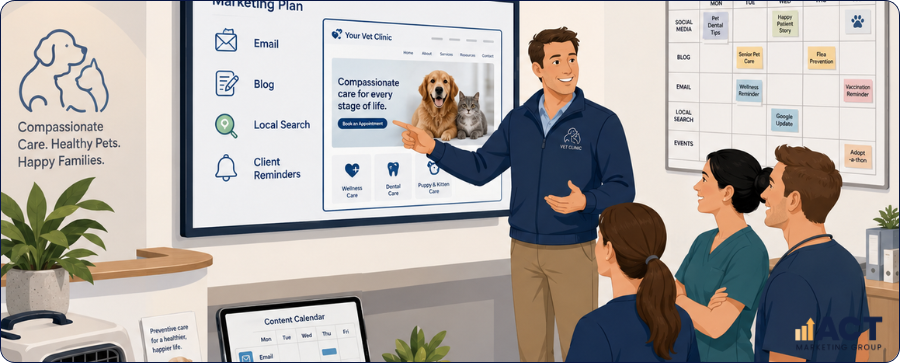
Build An In-House Marketing Function That Supports Your Vet Clinic
A sustainable in-house marketing function gives a veterinary clinic greater control over strategy, communications and growth priorities. It can also help the business coordinate its marketing efforts with appointment capacity, client service and recruitment needs. Begin by identifying one business priority, defining the purpose of the role and deciding which responsibilities should stay in house. From there, create a ninety-day plan covering access, approvals, internal communications, reporting and a focused group of marketing activities.