

How Australian Vet Clinics Can Build First Party Data Through Their Website and Online Booking Journey starts with collecting useful information during genuine client interactions, then connecting that information to the systems your clinic already uses. The objective is not simply to collect data at every opportunity, but to build reliable first party data that helps your team understand demand, improve bookings and maintain stronger customer relationships without adding unnecessary friction.
First Party Data Begins With Direct Client Relationships
First party data is information collected directly through interactions between your veterinary clinic and its clients or prospective clients. This can include website interactions, online bookings, enquiry forms, appointment history, marketing permissions and customer feedback, provided the information is collected for a clear and appropriate purpose.
This differs from third party data obtained through external sources and second party data that another organisation has collected directly and then shares under an agreed arrangement. For most clinics, the priority should be improving their own first party data collection because it comes from direct relationships your practice can understand and manage.
Get a Customized Marketing Strategy for Your Business
Schedule a free consultation to discuss how our digital marketing solutions can help you reach more customers.
Map The Website and Booking Journey Before Collecting More
Once you understand what first party data may be useful, map the path people take through your website before adding more forms, fields or tracking. A prospective client might first discover a vaccination page, read about your clinic, check your location and opening hours, then move into your online booking system. Looking at the whole picture helps your clinic decide which information should be captured at each stage. It also prevents data collection from becoming disconnected, where marketing tools collect certain data but reception, practice management and reporting systems cannot use it effectively.
Not every available field needs to be completed by the client. Before collecting first party data, ask whether your clinic has a clear reason for needing it and whether it will improve operations, marketing efforts or the client's experience.
Want to strengthen the website that supports your first party data strategy? Read our guide on How to Improve your Veterinary Clinic’s Website Ranking for practical steps to improve local visibility, site structure and booking pathways.
Make Online Booking the Core First Party Data Collection Point
After mapping the journey, online booking becomes one of the most useful places for first party data collection because it captures information during a direct interaction with someone who intends to use the clinic. Booking data can provide a clearer indication of customer needs than broad website traffic figures because it is tied to an actual appointment request.
The key is to balance useful data collection with convenience. Asking for too much information can make a straightforward booking feel complicated, while collecting too little can leave your reception team needing to contact the client for basic details that could reasonably have been provided during the booking journey.

Keep Required Booking Fields Focused
Start with information needed to identify the client, identify the animal and allocate an appropriate appointment. Depending on your clinic and booking system, this could include client name, contact details, pet name, species, whether they are a new or existing client, appointment type and a short reason for the visit. Additional clinical or administrative information can often be collected later where appropriate. Keeping the initial form focused can support a smoother customer experience while still giving the clinic useful customer insights.
Separate Booking Communications From Marketing Permission
A mobile number or email address supplied to confirm a veterinary appointment serves an immediate operational purpose. Marketing purposes should be considered separately so clients can clearly understand when they are agreeing to newsletters, clinic updates or other promotional communications.
A clear marketing option also improves data quality because your clinic can distinguish between people who need appointment communication and those who have actively chosen to receive broader marketing. That creates a stronger foundation for privacy-compliant first party data marketing than relying solely on contact details that happened to be collected during a booking.
Explore how changing marketing priorities are shaping veterinary practices. Read our guide to Veterinary Marketing Trends for practical insights into how Australian vet clinics can adapt their marketing approach.

Use Website Interactions to Add Relevant Context
With booking data in place, website interactions can provide additional context about customer behaviour. Your clinic may want to understand which service pages generate booking activity, which locations attract the most interest and where prospective clients stop before completing an appointment. The goal should not be to monitor every possible user behaviour. Instead, focus data collection on website interactions that can help you improve the booking process, understand customer needs or assess campaign performance.
Connect Customer Data to Systems Your Team Can Use
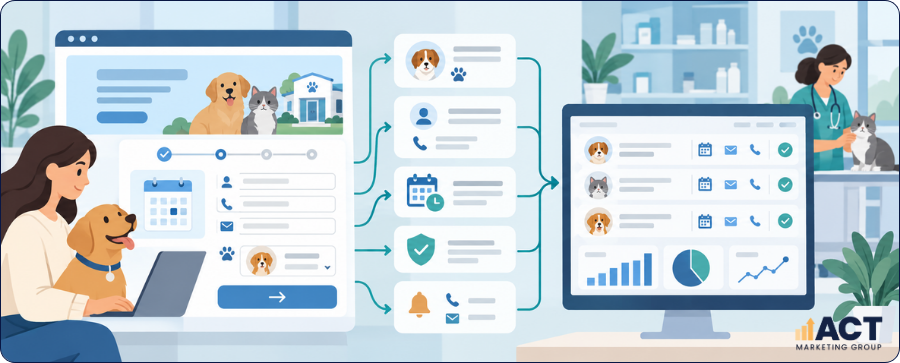
Collecting first party data is only useful when your team can access and interpret it. If booking details sit in one platform, website information in another and marketing permissions in separate spreadsheets, your clinic can end up with fragmented customer data and no clear understanding of which record is correct.
Start by deciding which system should be the main source for each data type, then minimise unnecessary duplication. Some larger businesses use customer data platforms to bring information together, but many veterinary clinics can achieve a practical result through simpler connections between their website, online booking system, practice management software, analytics and email or SMS platform.
Build Privacy into Your First Party Data Strategy
As customer data becomes more useful, data privacy needs to be considered throughout the website and booking journey. Australian clinics should understand which privacy regulations apply to their business and ensure compliance with the obligations relevant to their circumstances, including how personal information is collected, stored, accessed and used. A proactive approach is generally easier to manage than attempting to correct unclear practices later. Respecting user privacy can also support trust because clients can see what information is being requested and understand why the clinic needs it.
Privacy compliance should not be treated as a one-off website project. As privacy regulations evolve, new software is introduced or your marketing strategies change, review how information moves between your website, booking system and marketing tools. Privacy concerns are also one reason to be selective about third party sources and tracking technology. Collecting information through direct interactions gives your practice more control, but that control still needs to be supported by clear internal processes.
Have Questions?
We're Here to Help!
Use First Party Data Insights To Improve Marketing And Client Experience
Once the underlying data is reliable, first party data insights can help your clinic make marketing decisions based on actual client activity. Instead of assuming what your target audience wants, you can examine which services attract enquiries, which pages contribute to bookings and which communications appear relevant to different parts of your client base. Leveraging first party data does not require complicated predictive analytics or machine learning for most veterinary clinics. Useful customer insights often come from straightforward comparisons between website activity, bookings, appointment types, repeat visits and campaign performance. Your clinic could use these insights to:
Fine tune service pages with low booking activity
Improve calls to action on high-traffic pages
Compare new-client bookings by marketing source
Identify services generating consistent demand
Review which appointment types are commonly booked online
Develop more relevant content for existing clients
Assess whether communications drive engagement
Improve follow-up processes for suitable client groups
Personalised content should still have a practical purpose. Sending relevant experiences or information based on a genuine client relationship is different from over-segmenting people using assumptions that your data does not support.
Prioritise Data Quality Over Database Size
As first party data collection grows, data quality becomes more important than the total number of records stored. A large database containing duplicate profiles, invalid contact information and unclear marketing permissions can create more work while providing limited valuable insights. A smaller, accurate database can support better marketing, clearer reporting and more reliable customer relationships. Before investing heavily in collecting first party data from more people, review whether the information you already have is consistent enough to support useful decisions.
Avoid treating any one metric as the whole picture. Click through rates, for example, may help assess an email campaign, but completed bookings and ongoing customer relationships are usually more relevant to the clinic's broader objectives.
Strengthen Your Vet Clinic's First Party Data Strategy
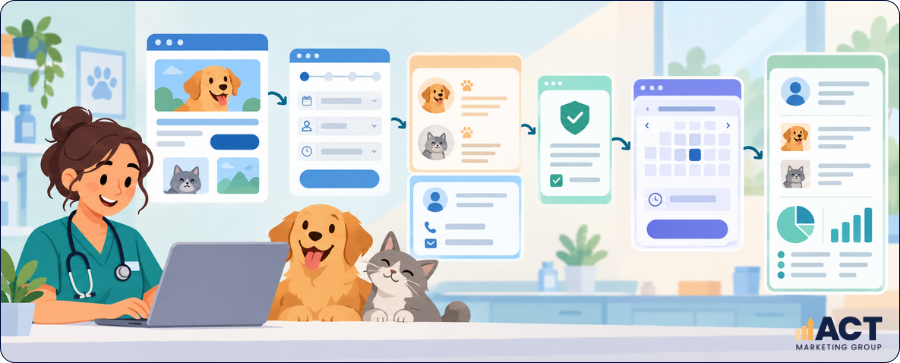
A practical first party data strategy begins with the relationship between your clinic and the people using its website. Map the journey from service page to appointment, collect only useful information, keep the booking process straightforward, separate operational communication from marketing consent and connect the resulting data to systems your team can maintain.
From there, focus on data quality and continuous improvement rather than database size. When your clinic has a clear understanding of where customer data comes from and how it supports decisions, first party data can become a valuable asset for improving marketing, website performance and client communication while respecting user privacy.
For Australian veterinary clinics reviewing their digital marketing, website or online booking experience, ACT Marketing can assess how those elements work together and identify practical opportunities to strengthen first party data collection. The aim is not to add more technology for its own sake, but to create a clearer digital journey that helps your clinic make smarter decisions from information collected directly through real client interactions.