
SEO Trends for AI Search Results: What Dental Clinics Should Change on Service Pages in 2026 centres on making dental service pages more useful, specific and easy for search engines and AI systems to interpret. For a dental practice, that means moving beyond pages built mainly around target keywords and creating content that clearly explains treatment context, suitability, alternatives, practical considerations and the next step for a prospective patient.
This change does not make traditional SEO irrelevant. Search engine optimisation still depends on accessible web pages, useful information, technical SEO and a clear understanding of search intent, but AI search adds another consideration: your content may now be interpreted, summarised and surfaced across AI Overviews, Google AI Mode and other search platforms before a person visits your own website.
AI Search Is Changing How Dental Services Appear in Search Results
The first change is how people search for dental information. Traditional search often involved relatively short search queries, while AI search tools increasingly allow people to ask detailed questions, compare options and explore related questions within the same search experience. This means search visibility can no longer be considered only in terms of a position on a traditional search engine results page.
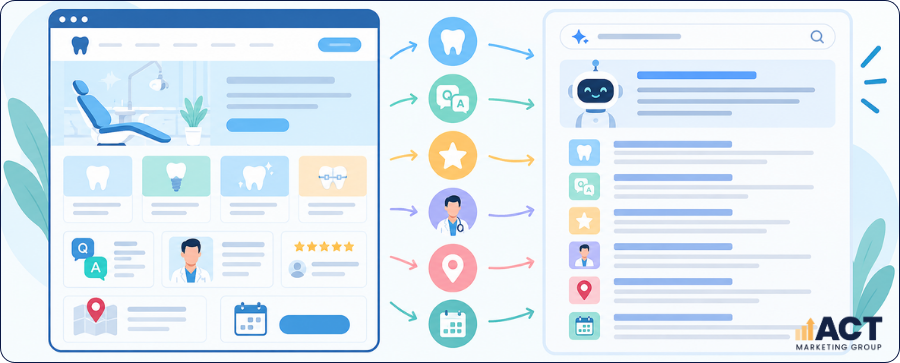
A dental service page may appear in traditional search results or local search results, while relevant web pages may also be surfaced as supporting sources within Google AI Overviews and Google AI Mode. SEO strategies should therefore consider whether the underlying content provides useful direct answers and enough context for these different search experiences.
Get a Customized Marketing Strategy for Your Business
Schedule a free consultation to discuss how our digital marketing solutions can help you reach more customers.
Build Service Pages Around Search Intent Rather Than Keyword Repetition
Once search behavior becomes more conversational, understanding search intent becomes more important than repeating target keywords. Search engines need to understand what a page actually helps someone accomplish, while the person reading it needs enough information to decide whether the service is relevant to their circumstances. For dental clinics, the practical approach is to map each major service page around the patient decision process. Search volume and keyword research can still help identify what people search for, but the final content strategy should organise those terms around useful subjects rather than allowing SEO tools to dictate awkward headings or repetitive copy.
A page structured this way can also be more useful during zero click searches, where a person receives part of the answer directly within search results. Rather than withholding useful information to encourage a click, the objective should be to provide enough clarity that your own website becomes a useful next step when someone needs more detailed treatment information.
Human Expertise Gives Dental Content More Useful Depth
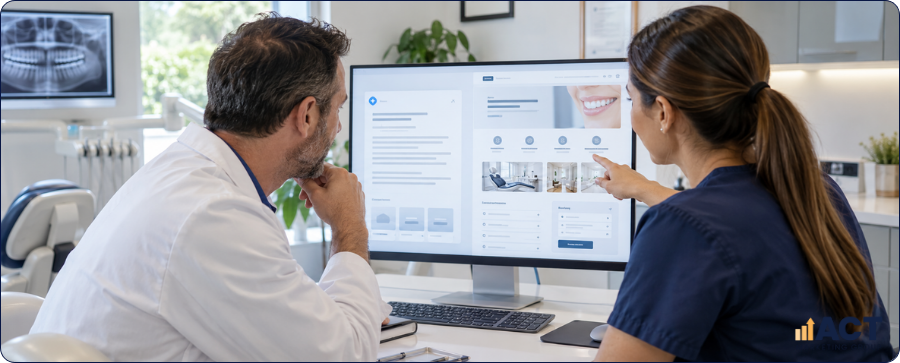
As AI generated content becomes easier to produce, basic treatment descriptions are becoming less distinctive. Generic explanations of veneers, implants, orthodontics or root canal treatment can be produced by many AI tools, but generated content does not automatically demonstrate how a particular practice approaches assessment, treatment planning or patient communication.
Human expertise therefore remains important during content creation. For a dental practice, high-quality content should reflect the knowledge of clinicians and the practice team while remaining understandable to the target audience, aligning with Google’s E-E-A-T concepts of experience, expertise, authoritativeness and trustworthiness. E-E-A-T is not a specific ranking factor, but Google says its systems give greater weight to signals aligned with strong E-E-A-T for topics that can significantly affect people’s health or safety.
Local SEO Should Connect Treatments with Real Practice Information
After the service itself is explained clearly, local SEO helps connect that information with the clinic providing it. Dental searches often carry strong local intent because patients generally need to attend a physical practice for examination, diagnosis and treatment, so local search remains important even as AI search engines change how information is presented.
A complete and accurate Google Business Profile, consistent practice details and useful location information can support visibility in local search results. Google says local results are mainly based on relevance, distance and prominence, so repeatedly adding terms such as Canberra dentist throughout a page is not a substitute for useful local search content explaining where the practice is located, the areas it reasonably serves and how patients can access its services.
Want to strengthen your dental clinic’s local search visibility? Read our guide to Google Business Profile for Dentists for practical ways to improve your profile, support local SEO and make it easier for nearby patients to find your practice.
Structured Data and Technical SEO Still Provide the Foundation
AI search has not removed the need for technical SEO. Search engines still need to crawl, interpret and index existing content before it has a realistic opportunity to perform across organic search, traditional search results or AI search results. Structured data can help search engines understand information on a page where an appropriate format applies, but it should accurately reflect visible content rather than replace it. Adding more markups does not compensate for a weak service page, and Google does not require special AI-specific structured data or schema for pages to be eligible for AI Overviews or AI Mode.
Technical search optimization should make strong content easier to discover and understand. It should not become a substitute for explaining the questions and considerations that matter to prospective patients. Looking for ways to strengthen the technical foundation of your dental website? Read our guide to Technical SEO for Dental Websitesfor practical ways to improve crawlability, site structure, page performance and overall search visibility.
AI Generated Content Still Requires Dental and Compliance Review
Ahpra does not impose a separate advertising rule specifically for AI generated content; the practice remains responsible for ensuring the final advertising complies with the National Law and applicable professional standards. For Australian dental practices, this is particularly important where content marketing discusses treatment outcomes, safety, speed, suitability or permanence.
The same advertising requirements apply across practice websites, landing pages, social media platforms and other promotional channels. Shorter social media copy, video descriptions and other formats still need to comply with the National Law and applicable Ahpra and Dental Board standards.
Dental practices should also review patient reviews, stories and quoted feedback before using them in advertising. Under current Ahpra guidance, a positive recommendation or statement about a clinical aspect of a regulated health service can be a prohibited testimonial when used in advertising. Comments that do not refer to clinical aspects of the service, such as comments limited to customer service, are not considered testimonials for this purpose, although they should still be assessed against other applicable advertising and consumer-law requirements.
Useful Formats Can Strengthen AI Visibility Without Adding More Pages
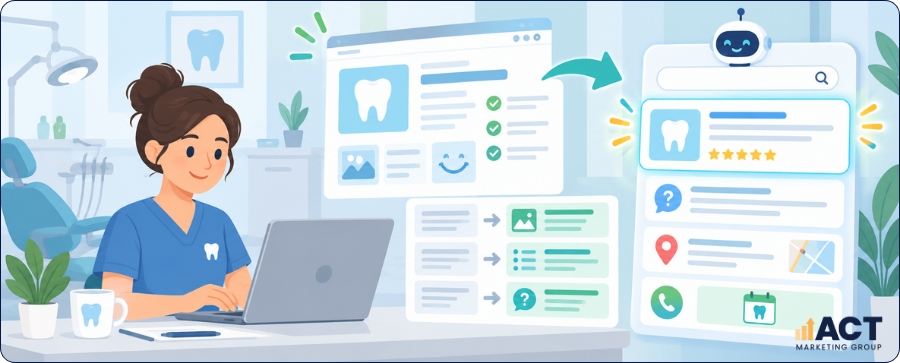
As search platforms become more varied, clinics can improve how existing content is presented rather than continuously creating new pages. Tables, short lists, diagrams, treatment stages and concise summaries can make complex information easier for people and AI systems to interpret. Visual search and video SEO may also support certain dental topics when they genuinely make the information clearer. A dentist-led video explaining what happens during an initial consultation, for example, may add more value than a generic promotional video, particularly when the page also includes a clear written summary or transcript.
YouTube videos and other video content should still serve the page's purpose rather than being included simply to satisfy an SEO checklist. The same applies to imagery: original and relevant visuals are generally more useful than stock photography that adds little to a patient's understanding.
Search Performance Should Be Measured Across the Full Patient Journey
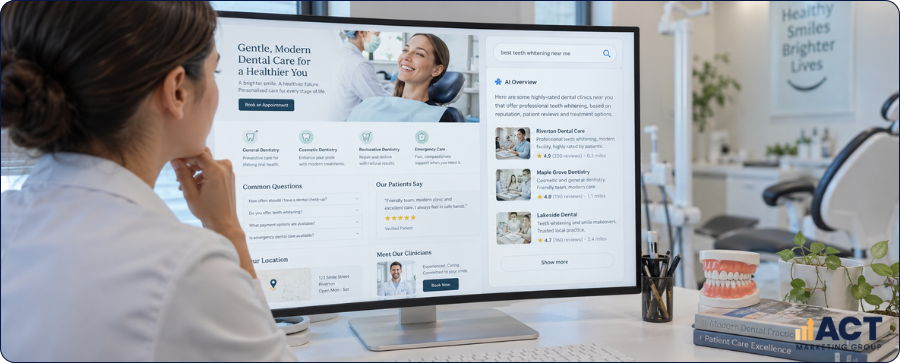
With more search experiences available, search rankings alone provide an incomplete view of performance. A dental practice should still monitor organic search positions where useful, but search performance should also consider impressions, search traffic, local visibility, service-page engagement and relevant enquiries. AI visibility can be harder to assess consistently because people may encounter information through AI Overviews, AI search results or other search engines before reaching the practice website. The practical response is to combine available search data with enquiry and conversion information instead of relying on one SEO metric.
SEO professionals should also consider the quality of enquiries rather than assuming that greater search traffic is automatically better. A service page attracting fewer but more relevant enquiries may provide greater practical value than one generating large amounts of informational traffic from users who are unlikely to become patients.
Have Questions?
We're Here to Help!
Use A Practical 2026 Service Page Framework
Bringing these changes together, the latest SEO trends do not require dental clinics to abandon traditional SEO or rebuild every page for the AI era. The stronger approach is to improve existing content, so it answers real search queries, demonstrates appropriate human expertise, supports local search and remains technically easy for search engines to process.
Read our guide to Dental SEO Trends for practical insights into evolving search behaviour, content strategy and local visibility for Australian dental practices. A practical first-stage service page review can focus on five priorities:
Clarify Search Intent. Identify what the page should help a prospective patient understand and decide.
Improve The Opening. Provide a direct explanation of the service before moving into detailed information.
Cover The Treatment Decision. Address suitability, process, alternatives and practical considerations where relevant.
Add Practice-Specific Expertise. Explain meaningful aspects of assessment or treatment planning without overstating outcomes.
Review Advertising Language. Check clinical claims, promotional wording and treatment expectations before publication.
This approach is sometimes described in the SEO industry as answer engine optimization, but Google does not require a separate optimization framework for Google AI Overviews or AI Mode. The practical goal remains to provide direct answers, useful context and high-quality content so people, search engines and AI systems can understand what the page covers.
Strengthen Dental SEO Service Pages for AI Search In 2026
SEO trends are changing how dental practices need to think about service pages, but the response should remain measured. AI search, Google AI Overviews, Google AI Mode and other search platforms increase the importance of useful content, clear search intent, human expertise, local SEO and sound technical foundations rather than replacing them. For ACT Marketing, the practical next step is to review priority dental service pages individually and identify where information is too thin, repetitive, unclear or disconnected from the patient's decision process.