

How to Improve Website Visibility for Dental Implants and Invisalign in Australia requires a focused SEO strategy that connects your dental practice with patients actively researching these treatments. By improving website content, targeting relevant search terms, and strengthening local search visibility, you can help your practice appear in more relevant search results and attract visitors who may be considering a consultation.
Understanding How Dental Patients Search Online
Before investing in search engine optimisation, your practice needs to understand how prospective patients use search engines when researching dental treatments. Search behaviour often changes throughout the decision-making process, from learning about treatment options to comparing local providers and arranging consultations.
Someone researching dental implants may begin with general questions about replacing missing teeth before looking for treatment costs or nearby clinics. Similarly, a person considering Invisalign may compare clear aligners with traditional braces before searching for a dental practice that provides consultations.
Get a Customized Marketing Strategy for Your Business
Schedule a free consultation to discuss how our digital marketing solutions can help you reach more customers.
Identify Search Terms That Reflect Patient Intent
Effective keyword research helps you identify the words and phrases people enter into Google Search when looking for dental services. These target keywords represent different stages of patient research and should guide the information presented across your website pages. Relevant examples include:
Dental implants Canberra
Invisalign dentist Canberra
Dental implants cost Australia
Invisalign treatment near me
Dental implant consultation
Invisalign vs braces Australia
Use Free SEO Tools to Understand Patient Search Demand
You can use free tools such as Google Search Console to see which search terms bring visitors to your dental website, Google Trends to compare interest in dental treatments across Australia, and Google Business Profile to understand how patients find your clinic on Google Search and Maps. These tools provide useful insights to help you identify relevant keywords and improve your website visibility without investing in expensive SEO software.
Create Dedicated Pages for Dental Implants and Invisalign
Once you understand how patients search, the next step is organising your website content around their treatment needs. Dedicated service pages help search engines understand what your practice offers while giving visitors a clear place to find relevant information.
Combining multiple treatments on one general dentistry page can make it difficult to address individual patient questions thoroughly. Separate pages for dental implants and Invisalign allow you to explain each treatment, discuss suitability, and present the consultation process in greater detail.
Structure Your Dental Implant Service Page
Your dental implant web page should provide balanced information about treatment planning, clinical assessments, possible limitations, and ongoing care. Use descriptive page titles, clear headings, and relevant internal links to help website visitors navigate the information. Include information about:
What dental implants are and their intended purpose.
Factors affecting treatment suitability.
Initial assessments and treatment planning.
Potential risks and recovery considerations.
Factors influencing treatment costs.
Available alternatives and consultation arrangements.
Develop a Separate Invisalign Service Page
Your Invisalign page should explain clear aligner treatment without implying that every patient will achieve the same outcome. Describe the assessment process, treatment planning, aligner responsibilities, possible limitations, and alternative orthodontic options. Where appropriate, link to educational content that addresses common patient questions. Keeping information accurate and up to date helps maintain a useful resource for patients considering treatment.

Improve On Page SEO Across Important Treatment Pages
After developing dedicated service pages, on page SEO helps search engines interpret their content and relevance. This involves improving page titles, headings, written information, images, and internal links so that each page communicates its purpose clearly.
Your focus should remain on making information useful to patients rather than repeating a keyword phrase throughout the page. Search engine rankings depend on many factors, and adding more keywords does not automatically improve website ranking.
Write Clear Page Titles and Meta Descriptions
Page titles describe the main subject of each page and can influence how it appears in Google search results. A good meta description summarises the page content accurately and gives users a reason to explore it. Google may display different text depending on the search query.
Organise Headings and Internal Links
Use one clear main heading for each page, followed by descriptive subheadings that organise related information. Internal links should connect relevant pages without overwhelming visitors. For example, an article comparing dental implants and dentures can link to your implant service page, while an Invisalign comparison article can direct readers towards clear aligner consultation information. This approach improves site structure and makes it easier for users to navigate related topics.
Strengthen Local Search Visibility for Your Dental Practice
With your treatment pages organised, local SEO helps connect your practice with patients searching for dental services in their area. Location is particularly important for dental implants and Invisalign because consultations, assessments, treatment, and follow-up appointments usually require in-person visits.
Your local SEO strategy should accurately represent where your clinic operates and which services are available. This helps prospective patients identify whether your practice is a practical option for their needs.
Want to improve your dental clinic's visibility in local search results? Learn how to strengthen your Google Business Profile, reach nearby patients, and improve your local SEO strategy in our Guide to Local SEO for Australian Dental Clinics.
Keep Your Google Business Profile Accurate
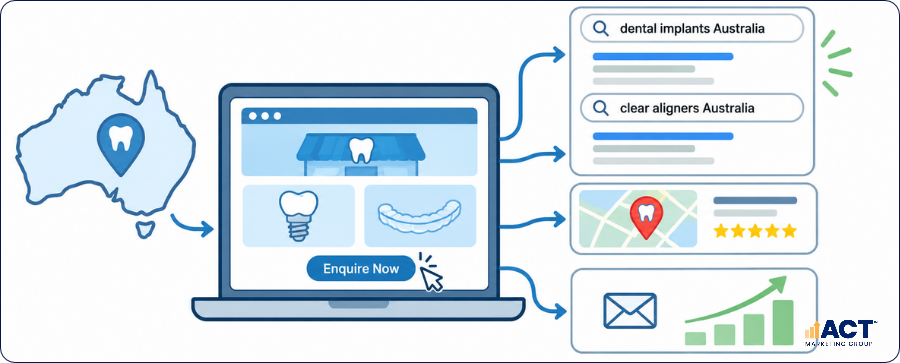
Your Google Business Profile provides important practice information within Google Search and Google Maps. Consistent information helps patients contact your practice and reduces confusion when they compare different providers.
Connect Your Location with Relevant Services
If your clinic operates in Canberra, use location information naturally within relevant page content. For example, an Invisalign service page might explain where consultations take place, how patients can reach the clinic, and whether parking or public transport is available. Avoid creating multiple pages with nearly identical content for suburbs where you do not operate. Instead, provide useful location information that accurately reflects your practice.
Develop Relevant Content Around Patient Questions
Once your main treatment and location pages are established, content marketing can help your website reach patients earlier in their research. Educational articles provide opportunities to address questions that may not fit naturally within a service page.
Quality content should explain treatment considerations clearly, acknowledge relevant limitations, and help patients prepare for professional advice. Your articles should support informed decisions rather than encouraging patients to choose a particular treatment without an assessment.
Address Common Invisalign Research Topics
Invisalign content can explore treatment suitability, clear aligner responsibilities, costs, and alternatives. For example, an article comparing Invisalign with braces could discuss removability, oral hygiene, treatment planning, and different orthodontic requirements. Publishing useful articles regularly can support organic growth, but quality and relevance matter more than the number of pages produced.
Improve Technical SEO and Website Performance
Even relevant content may perform poorly when visitors experience slow loading times, broken links, or difficult navigation. Technical SEO addresses the underlying website issues that affect how search engines access pages and how users interact with them. A practical technical review should examine loading performance, mobile usability, page accessibility, and whether important pages can appear in search results. These improvements help maintain a reliable experience across the website.
Is your dental website struggling with slow loading times or technical issues that may affect search visibility? Examine our Guide to Technical SEO for Dental Websites to learn how to improve website performance, mobile usability, and search engine accessibility.
Make Your Website Easier to Use on Mobile Devices
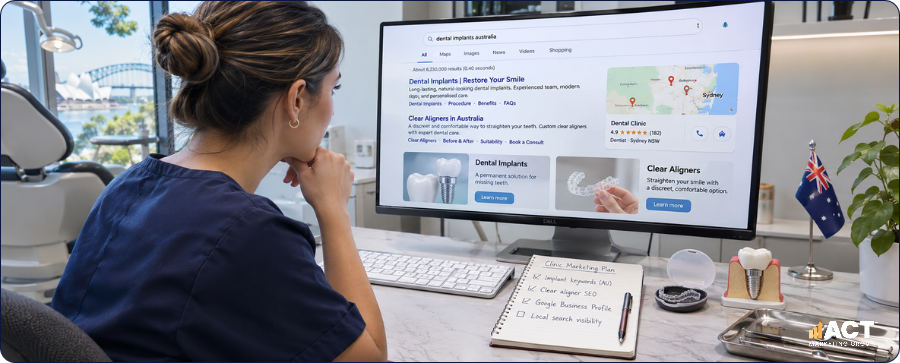
Many prospective patients research dental services using mobile devices, so your website should function properly on smaller screens. Check that:
Text remains readable without excessive zooming.
Navigation menus work correctly.
Contact buttons are easy to locate.
Appointment forms are straightforward to complete.
Images do not interfere with page loading.
Important treatment information remains accessible.
Review Website Speed, Images and Links
Large image files, unnecessary scripts, and inefficient website settings can affect loading performance. Compress images, use appropriate file formats, and enable browser caching where suitable so returning visitors do not need to download unchanged resources repeatedly. Image optimisation should also include descriptive file names and image alt text. Alt text helps screen readers describe meaningful images, while clear file names provide additional context. Regularly check for broken links and pages that no longer work, particularly within important treatment and booking pathways.
Build Website Credibility Through Accurate Information
Improving website visibility also requires information that patients can understand and assess. Dental implant and Invisalign searches involve healthcare decisions, so your website should accurately describe treatment considerations and practitioner qualifications.
Your practice can support credibility by identifying the clinicians responsible for information, reviewing clinical content, and explaining where patients can obtain individual advice. These measures also help maintain consistency when more content is added.
Earn Relevant Links From Reputable Websites
Links from other websites can help people discover your practice and may support search visibility when they come from relevant, trustworthy sources. Suitable opportunities may include legitimate professional directories, local business organisations, and relevant community resources.
Focus on earning quality backlinks through accurate business information and useful content. Avoid buying links or participating in link building arrangements designed primarily to manipulate search engine rankings.
Have Questions?
We're Here to Help!
Keep Dental Website Content Compliant With Advertising Requirements
As your website becomes more visible, maintaining compliant advertising becomes especially important. Australian dental practices must ensure that treatment information is accurate, balanced, and consistent with applicable Ahpra advertising requirements.
Claims about clinical outcomes, treatment suitability, speed, safety, or permanence must be supported by acceptable evidence and presented accurately. Dental advertising must not create unreasonable expectations, encourage unnecessary treatment, or mislead patients about the potential benefits and risks of a procedure.
Want to ensure your dental marketing meets Australian healthcare advertising requirements? Read our Guide to AHPRA Compliance for Dental Marketing to understand the key advertising rules, avoid misleading treatment claims, and maintain compliant website content.
Review Images, Testimonials and Pricing
Dental practices must not use patient testimonials about clinical aspects of treatment in practice-controlled advertising, including websites and promotional social media content. Independent patient reviews are not automatically prohibited, but practices must not use treatment-related testimonials to promote their services.
Before-and-after images require careful assessment because presentation and context may influence patient expectations. Clinical images must also be handled in accordance with applicable privacy and consent requirements.
Where treatment pricing is advertised, provide clear and accurate information about costs, including relevant inclusions, exclusions, and conditions. Explain when additional procedures or individual treatment needs may affect the final price, and clearly state the terms and conditions of any promotional offers.
Measure SEO Performance and Patient Enquiries
After improving your website content, technical performance, and local presence, ongoing measurement helps determine whether your SEO strategy is reaching the right audience. More website traffic is useful only when visitors are relevant to your services and location.
Tools such as Google Search Console and Google Analytics can help your practice understand how people discover and use your website. Reviewing these results alongside appointment enquiries provides a more practical picture than tracking keyword rankings alone.
Monitor Google Search Console
Google Search Console provides information about how your website appears in Google search results. Review dental implant and Invisalign performance separately to identify which pages may need improvement. Useful measurements include:
Search queries generating impressions.
Pages receiving organic search clicks.
Changes in average search positions.
Click-through rates for important pages.
Indexing problems affecting website visibility.
Create a Practical SEO Improvement Plan
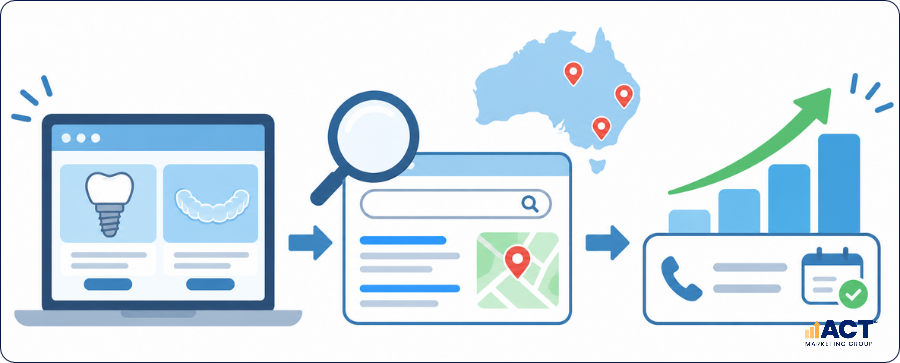
With reliable performance information available, the next step is organising improvements into manageable activities. A clear schedule helps practice owners and managers prioritise important website changes without placing unnecessary pressure on their clinical teams.
SEO results take time and depend on factors including competition, website condition, and search demand. Rather than expecting immediate changes in site ranking, focus on completing useful improvements and reviewing progress consistently.
Improve Dental Implant and Invisalign Website Visibility With ACT Marketing
ACT Marketing works with Australian businesses to develop practical SEO strategies based on search visibility, website performance, and measurable business objectives. For dental practices, this involves identifying relevant search opportunities, improving website content, and evaluating how online enquiries relate to practice goals.
If your practice wants to improve its visibility for dental implants and Invisalign, begin by reviewing your existing treatment pages and local search presence. Contact ACT Marketing to discuss a dental SEO strategy suited to your clinic, services, and location.
Frequently Asked Questions
Dental practices can improve website SEO by using relevant keywords, clear title tags, descriptive meta tags, and organised header tags that help users navigate the business website. Website owners can also use SEO tools and free resources to identify low competition keywords, optimise images, and improve how Google ranks relevant pages in search engine results.
Off page SEO can support search visibility by building credibility through reputable websites, relevant online communities, and appropriate social media channels. These activities may help patients discover your practice across the World Wide Web, including through Google and other search engines, while supporting broader search visibility.
Google assesses factors such as content relevance, website usability, and page quality when determining which pages are displayed on a search results page. Pages covering the same subject may perform differently because of their content quality, internal links, and usefulness to visitors, so a small business owner should prioritise improving existing pages rather than simply publishing more pages.