

How Veterinary Clinics Can Use Real Staff, Pets and Clinic Photos to Produce Better Ad Creatives starts with showing prospective clients the people, animals and environment they can genuinely expect to encounter at your practice. For an Australian veterinary clinic, original photography can support more relevant ad creatives because the visuals are directly connected to your team, services and day-to-day clinic experience.
The objective is not to replace every stock image with an unplanned phone photo. Producing better ad creatives requires a structured library of high-quality images and video content that reflects your brand identity, speaks to the right target audience and gives your marketing campaigns enough variety to test what works.
Real Clinic Photography Gives Your Ads a Clearer Purpose
Once a prospective client notices your advertising, the creative needs to help them understand who you are and what you provide. Real photographs of your veterinarians, nurses, reception team, patients and clinic spaces can make the ad message more specific because people are seeing the actual practice behind the advertisement.
This also helps create consistency between your digital advertising and the experience a client has when they visit your website or arrive at the clinic. That consistency can support brand recognition and brand recall over time, particularly when the same visual style and consistent brand voice appear across several marketing channels.
Get a Customized Marketing Strategy for Your Business
Schedule a free consultation to discuss how our digital marketing solutions can help you reach more customers.
Start With the Target Audience Before Planning the Photography
The next step is to decide who each group of images is intended to reach. A general new-client campaign may need welcoming team and clinic photographs, while an advertising campaign for veterinary dentistry may need more specific creative assets showing the clinical team, relevant equipment and treatment environment.
Want to strengthen the creative side of your campaigns even further? Read our guide to How Australian Vet Clinics Can Produce Better Ad Creatives That Pet Owners Actually Click On for practical ideas on visuals, ad copy, formats and creative testing.
Thinking about the target audience first prevents a common problem: investing in attractive photographs that do not support a useful ad message. Your creative elements should help a person understand the relevant service quickly rather than expecting one generic team photograph to carry every campaign. A practical planning table can connect each audience with suitable ad visuals:
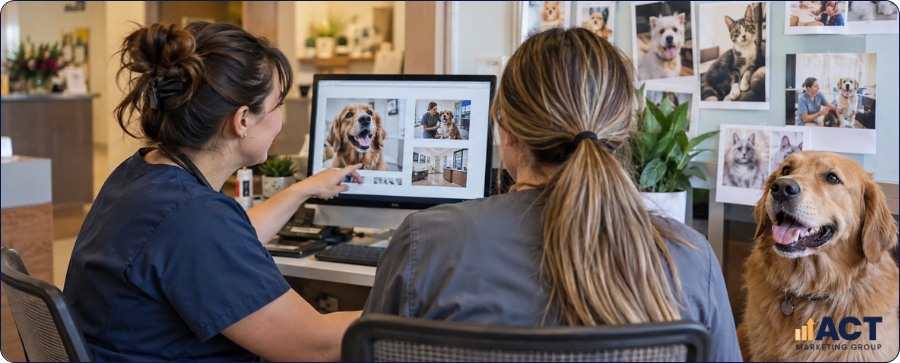
Build a Shot List Around Real Clinic Moments
With the audience and campaign purpose established, turn those requirements into a detailed shot list. The key elements are variety, relevance and enough space within each composition to adapt the photograph for different ad formats.
Instead of asking for a broad set of “vet photos”, identify specific scenes that your marketing team is likely to use. This produces more flexible marketing materials and reduces the chance of discovering later that every photograph looks almost identical. For example, your shot list could include:
A veterinarian greeting a calm dog in a consultation room.
A veterinary nurse interacting appropriately with a cat.
A veterinarian discussing a case with a colleague.
A wide view of a clean consultation or treatment space.
Individual or small-team portraits with natural expressions.
Keep Authentic Photography Deliberate and Professional
Real does not need to mean casual or poorly planned. High-quality visuals still require considered lighting, clean backgrounds, appropriate staff presentation and careful framing, even when the goal is to make the photographs feel natural. Ask staff to carry out familiar activities rather than repeatedly posing for the camera. Genuine interactions are more likely to produce compelling ad creatives than exaggerated smiles, unusual handling positions or scenes that would never happen during an ordinary day at the clinic.
Capture Multiple Ad Formats During the Same Session
A good photograph becomes more useful when it can work across several placements. Rather than capturing only traditional landscape images, plan square, landscape and vertical compositions so the same photography session can support Google advertising, social media campaigns, website content and other digital marketing activity.
Read our guide to Google Ads Updates Vet Clinics in Australia Need to Know to Keep New Clients Coming In to understand the latest campaign, automation and measurement considerations for veterinary clinics.
The same principle applies to static creatives and video creatives. If an interaction looks natural as a photograph, consider capturing a few seconds of appropriate movement at the same time so the clinic gradually develops a broader library of creative assets. For each important scene, aim to produce:
Square Images: Useful across many feed-based ad formats.
Landscape Images: Suitable for websites, banners and some advertising placements.
Vertical Images: Better suited to mobile-first content and short form video ads.
Close Crops: Useful when a staff member or animal should capture attention.
Wide Compositions: Helpful when the clinic environment supports the brand message.
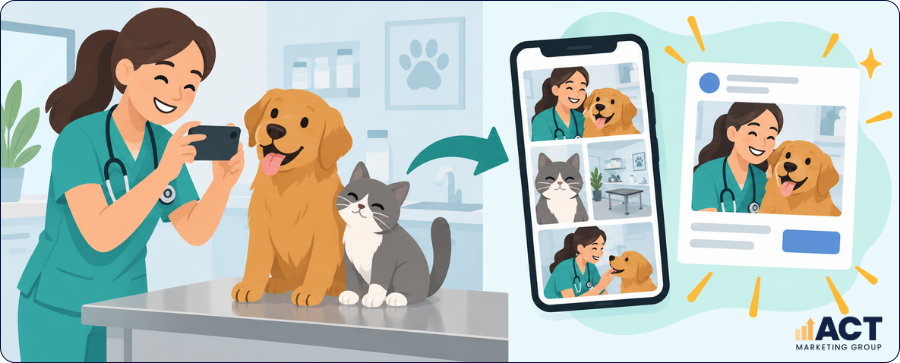
Use Short Form Video Ads to Add Movement Where It Helps
Still photographs will remain useful, but selected clinic moments can also become short form video ads. A few seconds of a veterinarian entering a consult room, a nurse preparing a space or a team member calmly interacting with an animal can provide additional creative options without turning every campaign into a complex video production. Keep video ads simple and relevant to the service being promoted. The purpose is not to create urgency or use dramatic editing; it is to give your target audience another clear view of your practice while maintaining the same brand voice used in your static advertising.
Potential video content can include:
A brief walk-through of the reception or consultation area.
A veterinarian introducing themselves on camera.
A nurse preparing a consultation space.
A calm staff-and-pet interaction.
A short explanation of a relevant clinic service.
Keep Your Brand Identity Consistent Across Every Creative
Once you have enough photographs and video, consistency becomes important. Clear brand guidelines should define how images, colours, typography, ad copy and tone work together so an advertisement still feels like your clinic even when the photograph changes. A consistent brand voice does not mean every ad must use the same wording or layout. It means the overall brand message remains recognisable and the practice presents itself in a measured, professional and approachable way across its advertising campaigns.
Match The Ad Copy to What the Photograph Actually Shows
Strong ad visuals cannot compensate for unclear ad copy. The photograph and written message should work together so the viewer can understand the service, its relevance and the next action without having to interpret two different ideas.
If the image shows a veterinarian consulting with an older dog, for example, the copy might focus on senior pet health rather than an unrelated promotion. If the creative shows your reception and clinic entrance, it may be better suited to local awareness or new-client advertising than a highly specific clinical service. A straightforward structure for many ads is:
Visual: Show the relevant person, pet or clinic environment.
Message: Explain the service or reason the advertisement is relevant.
Value Proposition: State clearly what the clinic provides without inflated promises.
Call To Action: Give the person a practical next step.
Keeping these elements aligned makes it easier for the audience to understand the advertisement in just a few clicks or seconds of attention.
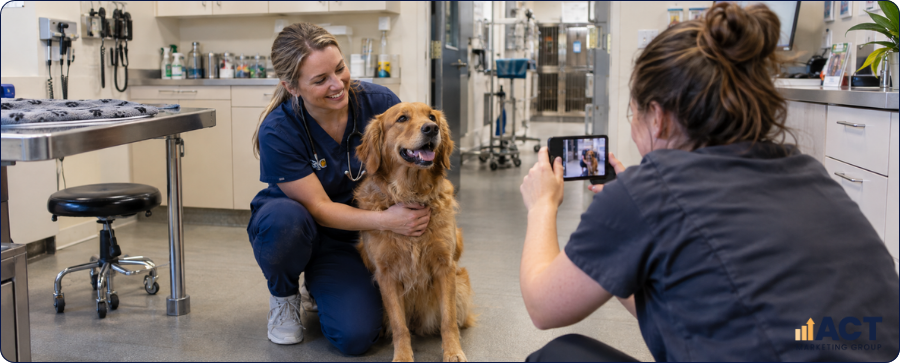
Protect Privacy and Obtain Appropriate Permission
Using real people and animals requires a clearer approval process than using generic stock images. Before creative assets are added to an advertising library, your clinic should confirm that the people involved understand how the photographs or videos may be used and that any required permissions have been recorded.
The same care should be applied to client-owned animals and anything visible in the background. A pet photograph may still reveal client information through a name tag, medical document, computer screen or conversation captured in video, so each asset should be checked before it is used in digital advertising. Clinics should also check the privacy, employment and professional obligations that apply to their own circumstances before publishing identifiable material.
Organise Creative Assets So They Remain Useful
As your image library grows, the challenge shifts from producing assets to managing ad creatives efficiently. A central folder filled with hundreds of files named with camera numbers makes it difficult for your digital marketing team to find an appropriate image when a new campaign needs to launch. Use a straightforward naming and filing system based on service, staff member, animal type, image orientation and approval status. This allows marketing efforts to reuse existing performing ad creatives where appropriate while still identifying when fresh material is needed.
Use Performance Data to Decide Which Creatives to Keep
Creative quality should not be judged only by what the clinic team prefers. Once ads are running, real performance data can show whether different photographs, ad formats and messages are supporting the campaign objective. Compare one meaningful variable at a time where practical. You might test a veterinarian-and-pet photograph against a pet-only image or compare static images with a short video while keeping the target audience and ad copy similar.
Have Questions?
We're Here to Help!
Use Creative Testing to Improve Campaign Performance Over Time
Once enough campaigns have run, the clinic can start identifying patterns rather than judging each ad in isolation. Certain staff members, image styles, species, camera angles or video formats may repeatedly support better campaign performance with particular audiences. That does not mean one high performing ad creative should run indefinitely. Ad creatives play different roles at different stages of the sales funnel, and repeated exposure can reduce consumer engagement, so your marketing team should continue testing fresh variations while retaining the visual elements supported by performance data.
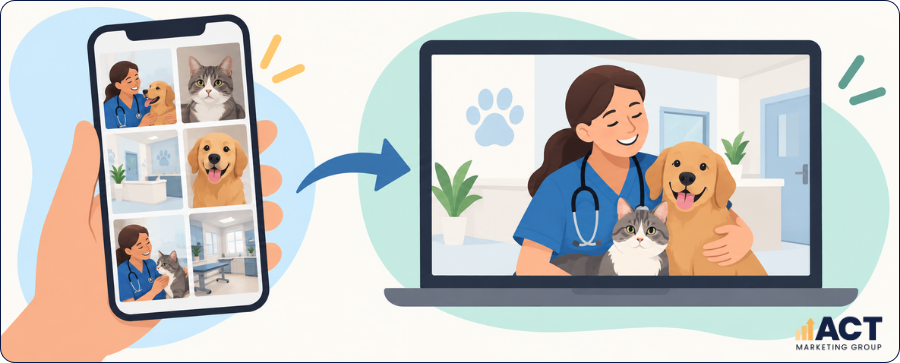
Use Real Veterinary Clinic Photos to Build Better Ad Creatives
Real staff, pet and clinic photography can support more successful ad campaigns when it is treated as an organised marketing resource rather than a collection of occasional photographs. Start with the target audience, build a deliberate shot list, capture multiple ad formats, maintain a consistent brand identity and use performance data to decide which creative directions deserve further investment.
For a veterinary clinic, the practical next step is to audit your current creative assets and identify the largest gaps between the services you promote and the photographs or video you currently have available. ACT Marketing can help veterinary practices structure that process, create ads from approved clinic assets and connect ongoing creative testing with measurable digital advertising performance.