
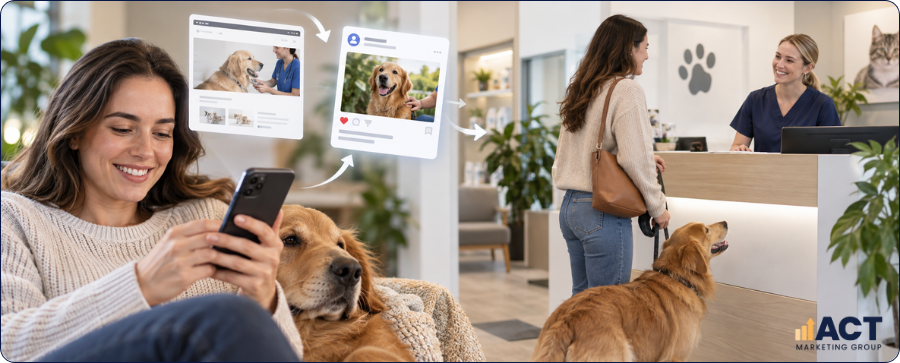
Retargeting for vets uses social ads to reconnect your veterinary clinic with website visitors who showed interest but left before making an appointment enquiry. Instead of relying only on new website traffic, a considered retargeting approach can keep your clinic visible to potential customers who have already researched your services and may still be deciding what to do next.
Start With Why Veterinary Website Visitors Leave
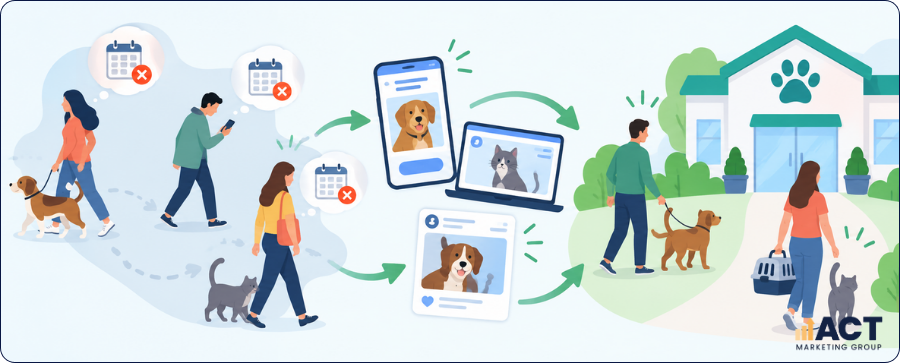
Before building a social media ad campaign, you need to understand why people visit your website without booking. Some website visitors may be comparing local clinics, checking opening hours or researching a particular service, while others may have reached your contact or appointment page before being interrupted or deciding to continue later.
These behaviours reflect different levels of intent, so treating every visitor as the same target audience can make an ad campaign less efficient. A visitor who spent time on a veterinary dentistry page, for example, generally provides a stronger indication of interest in that service than somebody who briefly visited the homepage.
Get a Customized Marketing Strategy for Your Business
Schedule a free consultation to discuss how our digital marketing solutions can help you reach more customers.
Research Does Not Always Mean Booking Intent
A large proportion of web traffic will be exploratory. People may be looking for general service information, clinic location details, opening hours or educational content before they are ready to contact your team. That means your marketing strategy should distinguish between early research and stronger signs of appointment intent. Retargeting works more effectively when it follows those differences instead of assuming every visitor is ready for the same call to action.
Booking Friction Can Cause Otherwise Interested Visitors to Leave
Some potential customers may have decided to enquire but still leave because the process feels inconvenient. Long forms, unclear next steps or poor mobile usability can all weaken lead generation. Before increasing ad spend, review whether your booking pathway is helping or hindering conversion. Social ads can bring people back, but they cannot fully correct a difficult website experience.
Build Audience Targeting Around Genuine Intent
Once you understand the reasons people leave, separate your target audience according to the actions they took on your website. Precise targeting does not require dozens of small groups; it means identifying a relevant audience whose previous activity gives you a reasonable basis for choosing the message. This makes social media advertising campaigns more useful because each audience receives information connected to its likely needs. You can begin with a small number of clear groups and refine the structure as your website traffic and conversion data provide stronger evidence.
Match Social Ads to What Visitors Were Researching
After defining your audiences, align ad content with the pages or services people previously explored. A single ad promoting the whole practice may suit general visitors, while service-specific audiences often benefit from information that continues the experience they already had on your website. For example, somebody who viewed a dental care page could see an ad explaining what a veterinary dental assessment involves, while somebody researching vaccinations might receive educational content about preventative care. The advertising should remain relevant without implying that your clinic knows personal information about a particular animal or medical concern.
Keep Ad Copy Relevant and Restrained
Ad copy should help the person continue their decision process rather than push them into an appointment before they are ready. Useful messaging may explain the service, clarify what happens during an appointment or make the next step easier to understand. Keep the language straightforward and avoid wording that explicitly references previous browsing behaviour. Social media users may accept paid ads in their social feeds, but overly specific retargeting language can make the experience feel intrusive.
Use A Call to Action That Matches Intent
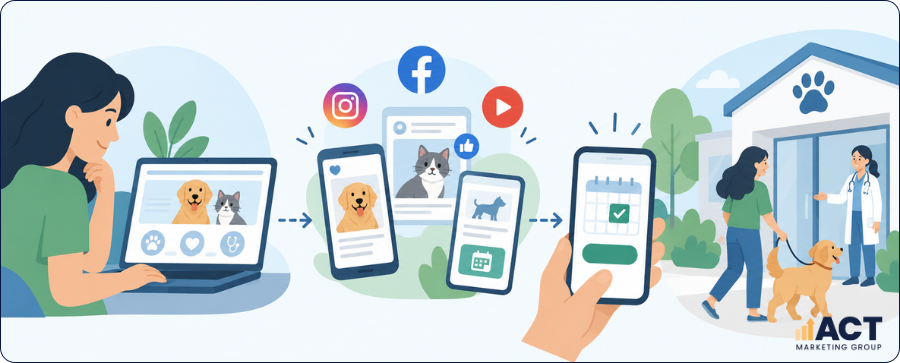
Your call to action should reflect the likely readiness of the audience. Someone who previously reached your booking page may reasonably receive a direct appointment prompt, while a visitor who only viewed organic content may benefit from another useful resource first. This distinction is important because different objectives require different messages. The same social media ad campaign can contain several audience groups without forcing every target user towards the same action.
Retargeting works best when it supports a wider, consistent marketing system. For a practical way to coordinate your SEO, social media, email and paid advertising each month, read our Digital Marketing Checklist for Vet Clinics.
Recover Lost Appointment Enquiries Before Buying More Traffic
Higher-intent visitors deserve particular attention because they have already moved further through the decision process. If someone reached an appointment or contact page without submitting an enquiry, a social media ad campaign may provide a useful reminder and a straightforward route back. However, advertising cannot compensate for a poor appointment process. Before directing paid ads back to the same landing page, test whether the experience is clear, fast and practical on mobile devices.
Test The Booking Path First
Review the booking process by checking:
Whether forms work properly on mobile and desktop.
Whether every form field is necessary.
Whether telephone and online options are easy to find.
Whether the next step after submission is clear.
Whether completed enquiries are excluded from further acquisition ads.
For service-based businesses such as veterinary clinics, these changes can sometimes improve campaign performance without increasing ad spend. A better booking path makes both paid and organic website traffic more useful.
Separate Website Problems from Advertising Problems
If many visitors reach the same stage and leave, the issue may not be audience targeting. It may be the landing page, form design or lack of clear information. That is why conversion data should be reviewed before changing ads. Sending more traffic to a weak page can increase costs without improving appointment outcomes.
Choose Social Media Platforms for a Clear Purpose
With your audience and booking pathway established, choose social media channels according to where they support the client journey. Facebook ads and Instagram ads are common options for veterinary social media marketing because they allow clinics to reconnect with previous website visitors while they use familiar social media platforms. Other social media platforms may have a role depending on your target audience, content resources and campaign objective, but using every available channel rarely improves a retargeting strategy by itself. The right platform is the one that provides access to a relevant audience and produces measurable actions at a reasonable cost.

Facebook and Instagram Often Suit Retargeting
Facebook ads and Instagram ads are commonly used because they support multiple ad formats, different ad placements and audience targeting options. They can also work well with simple clinic photography, short video content or service-focused ad copy. For many clinics, these channels provide enough flexibility to test different objectives without spreading the budget too widely. That makes them a practical starting point when existing website traffic is sufficient to build useful audiences.
Other Platforms Should Have a Defined Role
Google Ads may support retargeting outside social media, while YouTube ads can suit clinics with useful educational video content. TikTok ads, LinkedIn ads, Pinterest ads and Snapchat ads may be appropriate in narrower situations, but their value depends on audience fit rather than platform popularity. A new social network should be added only when there is a clear reason to use it. Age distribution, content style, audience size and expected campaign performance should all influence that decision.
If Google Ads is part of your clinic’s broader retargeting and lead generation strategy, it is worth keeping up with platform changes that may affect campaign performance. Read our Google Ads Updates for Vet Clinics for a practical overview of recent changes and what they may mean for veterinary advertising.
Select Ad Formats That Suit the Message
Once you have chosen the social platform, select ad formats according to the information you need to communicate. A single ad with a clear image and direct message may be enough for appointment reminders, while carousel ads can help explain several related services without crowding one piece of creative. Video ads and story ads can also work when the information genuinely benefits from visual explanation. The format should support the message rather than becoming the focus of the campaign.
Single Image and Carousel Ads Keep Messaging Simple
Single-image ads are useful when you have one clear message and one call to action. Carousel ads can work when you need to present several connected points, such as different aspects of preventative care or stages in an appointment process. Both formats can be effective without requiring large amounts of creative production. For many veterinary clinics, clarity is more important than using every available ad type.
Video Content Works Best When It Explains Something
Video content can help introduce the clinic environment, explain how an appointment works or provide practical service information. Short video ads may also suit social feeds where users expect quick, visual content. However, video should have a clear purpose. A simple static ad may be more cost effective if the message does not require movement or explanation.
Treat Privacy as Part of Social Media Advertising
As retargeting depends on tracking website activity, privacy should form part of campaign design rather than being added after an ad campaign is already running. Your clinic should understand which advertising and analytics tools operate on the website, what information they collect and where that information is sent.
This is especially important when your business operates in a healthcare-related environment, even though veterinary care is not human healthcare. Keep tracking proportionate to the advertising purpose and review your setup periodically rather than assuming the default settings of a social ads platform are suitable.
Keep Tracking Limited to What You Need
Your digital marketing setup should collect only the information required to support the campaign objective. Extra tracking does not automatically improve audience targeting and may create unnecessary complexity. A practical review should consider:
Which tracking tools are installed.
Which events are being sent to advertising platforms.
Whether the data is necessary for the campaign.
Who can access advertising and analytics accounts.
Whether the setup has changed over time.
Review Data Use Alongside Campaign Changes
When you add new social media channels, ad platforms or measurement tools, reassess how data is being collected and used. This is particularly important if your team begins combining information from different systems. The ability to build a new audience does not mean every available source of data should be used. Keep the setup proportionate to the actual marketing purpose.
Control Ad Frequency and Creative Repetition
Once your social media advertising campaigns begin running, monitor how often the same people see them. Repeated exposure may help a visitor remember your clinic, but displaying identical ads too frequently can frustrate users and waste ad spend. Creative rotation helps manage this by giving the same relevant audience several useful messages rather than repeatedly serving one advertisement. The message can change while the audience remains the same.
Have Questions?
We're Here to Help!
Rotate The Message Before Adding More Ads
A useful rotation might include service information, appointment preparation, clinic access, preventative care or team information. This gives people different reasons to engage without requiring a completely new campaign. Organic posts can also help identify themes worth testing in paid advertising. If particular topics consistently attract useful engagement, they may provide direction for new ad content.
Watch Frequency Alongside Conversion Results
Frequency should not be reviewed in isolation. A higher number is not automatically a problem if campaign performance remains stable, while even moderate repetition may be inefficient if click through rates and conversions are falling. Monitor frequency alongside cost per enquiry, appointment conversion and overall campaign performance. This gives you a more practical basis for deciding when creative needs to change.
Measure Appointment Outcomes Instead of Surface-Level Activity
With campaigns running, your key metrics should connect advertising activity with meaningful business outcomes. Click through rates can indicate whether ad content attracts attention, but they do not show whether those clicks result in useful enquiries or booked appointments. Measure each stage of the journey so you can see where advertising is working and where prospective clients continue to drop out. This helps prevent cheap traffic from being mistaken for high-quality leads. A low cost per click is not automatically a successful result. A campaign that produces fewer clicks, but more suitable appointment enquiries may be more useful to the clinic.
Test Campaign Changes in a Logical Order
Once you have reliable measurement, optimisation should focus on controlled changes rather than frequently rebuilding the campaign. Changing the audience, ad copy, creative, landing page and budget at the same time makes it difficult to determine what actually influenced the result. Start with the factors closest to client intent before testing smaller creative variations. Audience quality and the booking experience will often deserve attention before minor differences in images or wording.
Test Audience and Landing Page First
Begin by comparing general visitors with higher-intent audience groups. Then check whether each group is being sent to a landing page that matches the ad message. If those two elements are weak, changing ad formats may have limited value. Strong targeting cannot compensate for an irrelevant destination.
Test Creative After the Foundations Are Stable
Once the audience and landing page are performing consistently, test ad copy, video ads, carousel ads or different ad placements. Change one important variable at a time where practical. Keep a simple record of the result. Over time, this makes your social media advertising strategy more dependent on actual booking data and less dependent on assumptions.
Build A Veterinary Retargeting Strategy Around Real Booking Data
If your clinic already generates consistent website traffic, start by identifying which service, contact and booking pages receive visitors without producing the expected number of enquiries. That gives your team a practical foundation for deciding which audiences should receive follow-up advertising and which parts of the website require improvement first.
ACT Marketing supports Australian businesses with SEO, social media advertising, Google Ads and broader digital marketing based on measurable search and conversion data. For veterinary clinics, a considered retargeting approach can help connect existing website traffic with more useful appointment opportunities while keeping campaign decisions grounded in audience intent, cost per enquiry and actual booking outcomes.